Golden Oriole
Oriolus oriolus
The Golden Oriole is a rare and elusive summer migrant in Britain, typically seen in the southern regions from late April to September, with sightings often restricted to woodland edges and mature trees. Its occasional appearances in the UK make it a highly sought-after species among British birders.
Field Identification Guide
Use these features to identify Golden Oriole in the field.
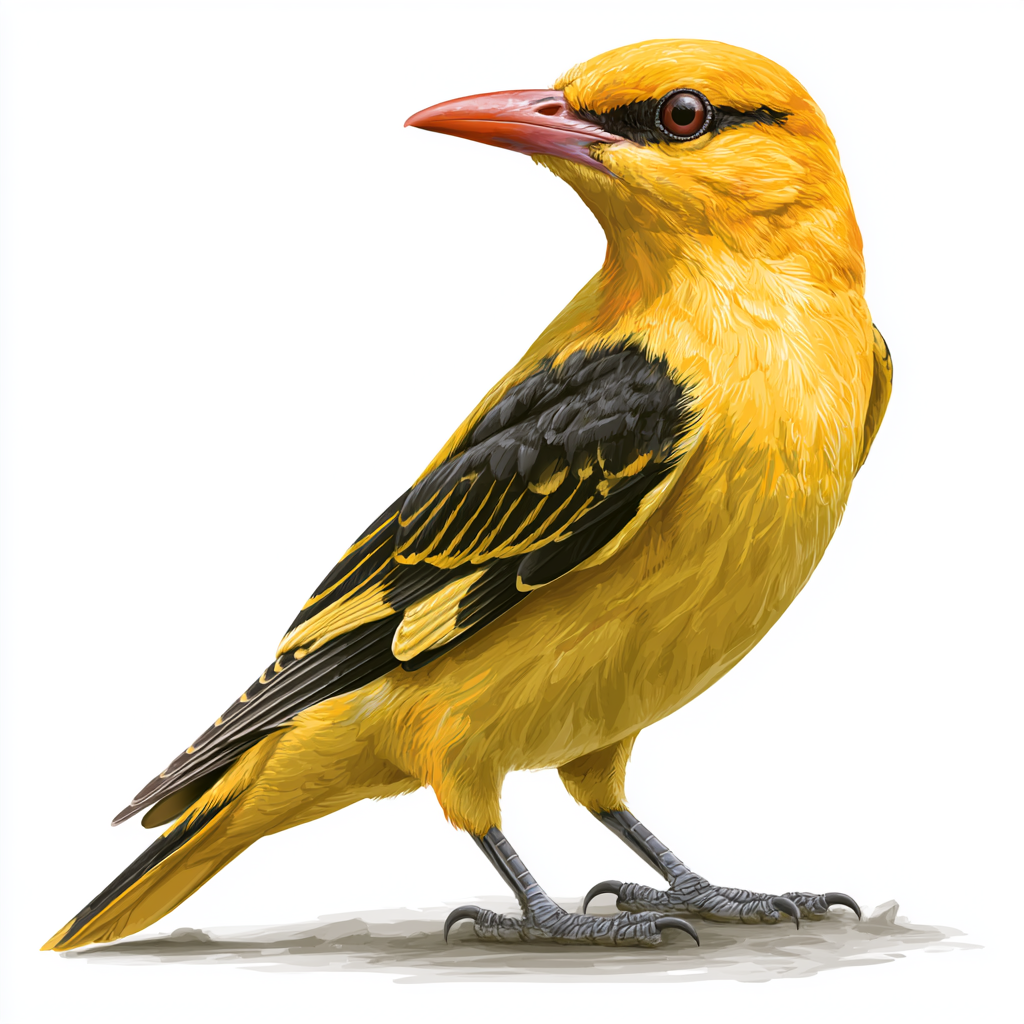
The Golden Oriole can be identified by its striking yellow and black plumage, long tail, and distinctive white wing bars, making it a standout species in the British countryside. Its black throat patch and greyish wings also help to distinguish it from other similar species.
The Golden Oriole is slightly larger than a Blackbird, measuring around 24cm in length, with a wingspan of 44-45cm, making it a medium-sized passerine bird.
The male Golden Oriole has a vibrant yellow plumage with a black throat patch and greyish wings, giving it a striking appearance, while its back and wings may appear more greenish-yellow in certain lighting conditions.
The female Golden Oriole has a more subdued greenish-yellow plumage with a greyish-brown back and wings, lacking the black throat patch of the male, making it slightly more challenging to identify.
The Golden Oriole's call is a distinctive, fluting "wee-o" or "pee-o", often repeated in a series, while its song is a melodious, whistled phrase that sounds like "wi-oo wi-oo".
Golden Orioles are insectivorous birds that forage for food in the canopy of mature trees, often flying with a swift, direct flight and making sharp, angular turns in pursuit of prey, while their habit of singing from a prominent perch makes them easier to locate.
The Golden Oriole can be confused with the Yellow Wagtail or the Willow Warbler, but its larger size, longer tail, and distinctive black throat patch in males help to distinguish it from these species, while the female's greenish-yellow plumage and greyish-brown back can be used to separate it from similar-looking warblers.
Quick Facts
Who's spotted this?
Loading...
Recent community sightings
Loading recent sightings...