Goldcrest
Regulus regulus
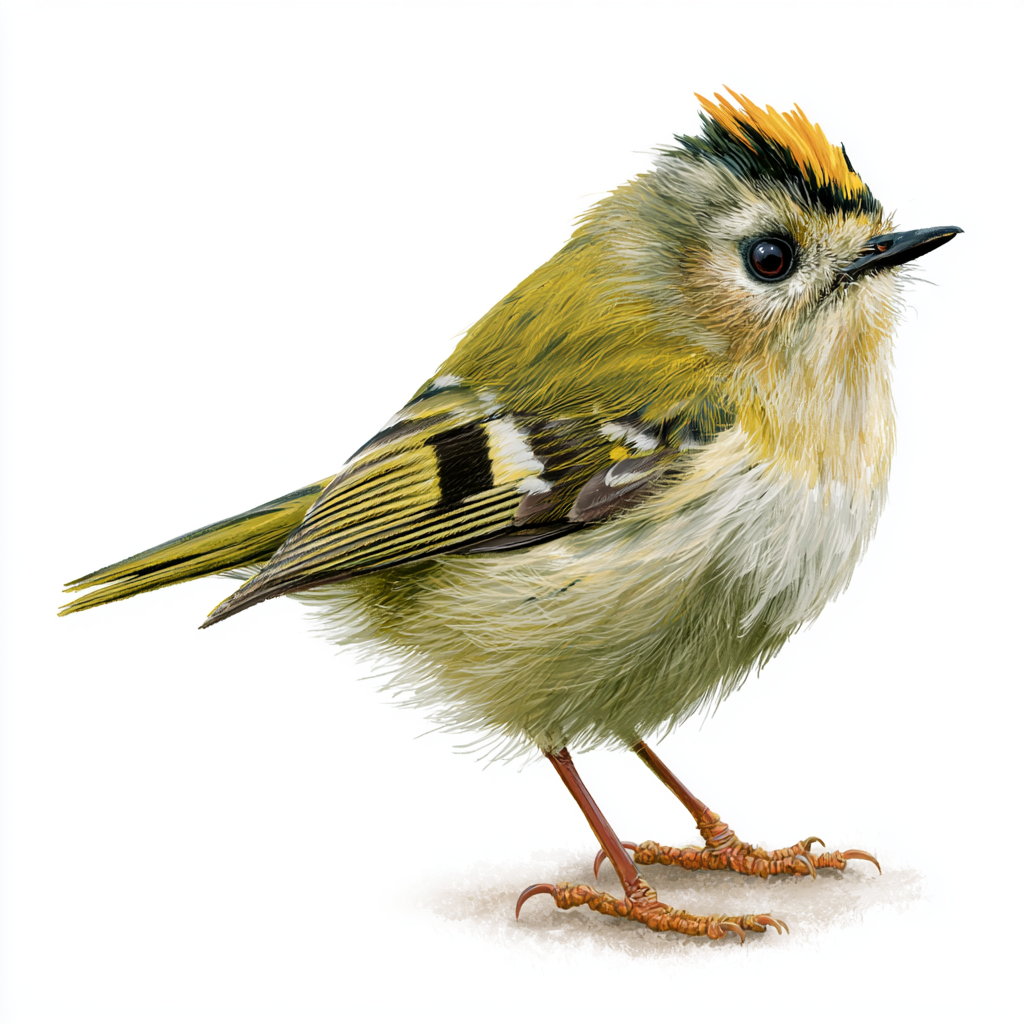
The Goldcrest is a tiny, yet striking bird, notable for its vibrant golden crest, and can be seen in Britain throughout the year, with migrants from northern Europe bolstering the resident population during the winter months. It is a common sight in coniferous woodlands, particularly during the winter when it can be found in large flocks.
Field Identification Guide
Use these features to identify Goldcrest in the field.
The Goldcrest's distinctive golden crest, white stripes above its eyes, and yellowish-green wings with white bars are key features that distinguish it at a glance. Its bright colours and patterned face make it a standout among small passerines.
The Goldcrest is smaller than a Blue Tit, measuring approximately 9-10 cm in length, making it one of the smallest birds in Britain.
The male Goldcrest's plumage is characterized by its bright golden crest, greenish-yellow wings, and white stripes above its eyes, with a predominantly greenish-yellow back and wings, and a white belly, with little to no seasonal variation.
The female Goldcrest's plumage is similar to the male's, with the golden crest being slightly less vibrant, but overall, the female's plumage is nearly indistinguishable from the male's.
The Goldcrest's call is a high-pitched, repetitive "tee-tee-tee" or "tsee-tsee-tsee", often described as a series of sharp, metallic notes, while its song is a more complex, melodic phrase.
Goldcrests are active, acrobatic birds, often seen flitting between branches in search of small insects and spiders, and are known for their rapid, darting flight style, frequently hovering in front of foliage to catch prey.
The Goldcrest can be confused with the Firecrest, but can be distinguished by its white stripes above the eyes, which are more pronounced in the Goldcrest, and its less vibrant orange-gold crest compared to the Firecrest's more intense orange crest.
Quick Facts
Who's spotted this?
Loading...
Recent community sightings
Loading recent sightings...