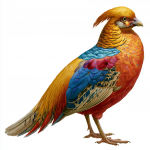
Great Grey Shrike
Lanius excubitor
The Great Grey Shrike is a rare winter visitor to Britain, typically seen in the southern and eastern regions from October to April, with occasional sightings in other areas. It is a notable species due to its large size and predatory nature, often perching prominently in open countryside.
Field Identification Guide
Use these features to identify Great Grey Shrike in the field.
The Great Grey Shrike can be identified at a glance by its pearly grey back, white underparts, and distinctive black eye-mask, as well as its stout bill and long tail. Its grey and white plumage, combined with its black mask, makes it a striking bird.
The Great Grey Shrike is slightly smaller than a Robin, but larger than a Blue Tit, with a length of around 20-25 cm.
The male Great Grey Shrike has a pearly grey upperparts, with a black eye-mask and white underparts, giving it a sleek and distinctive appearance, with little seasonal variation in its plumage.
The female Great Grey Shrike is similar to the male, with the same pearly grey and white plumage, and black eye-mask, making it difficult to distinguish between the sexes based on plumage alone.
The Great Grey Shrike has a sharp, metallic call, often described as a loud, ringing "tchak" or "tak", which is frequently repeated, particularly when the bird is alarmed or in flight.
The Great Grey Shrike is a predatory bird, feeding on small insects, mammals, and birds, often using a "watch and wait" approach, perching on a prominent branch or wire before pouncing on its prey, and flying with a swift, direct flight.
The Great Grey Shrike can be confused with other shrike species, such as the Lesser Grey Shrike, but can be distinguished by its larger size, more extensive black eye-mask, and paler grey plumage, as well as its distinctive call and predatory behaviour.
Quick Facts
Who's spotted this?
Loading...
Recent community sightings
Loading recent sightings...