Great Spotted Cuckoo
Clamator glandarius
The Great Spotted Cuckoo is a rare summer migrant to Britain, typically seen in the southern regions, particularly in open woodland and heathland areas. It is a scarce breeder in the UK, with most sightings occurring during the spring and autumn migration periods.
Field Identification Guide
Use these features to identify Great Spotted Cuckoo in the field.
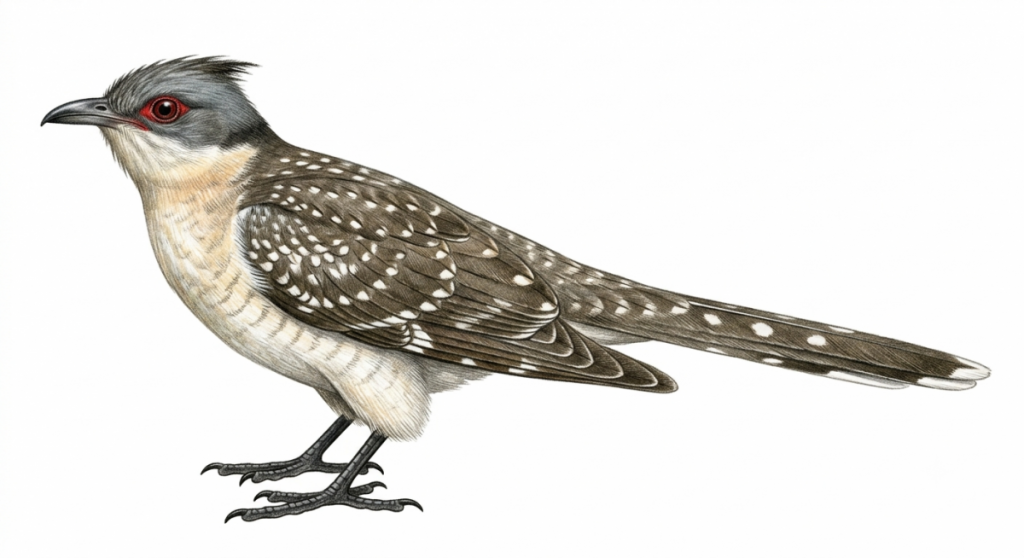
The Great Spotted Cuckoo can be identified by its grey-brown back, white belly, and distinctive white spots on its black primaries, as well as its long, graduated tail and stout bill. Its size and shape, combined with its spotted wings and tail, make it a distinctive sight.
The Great Spotted Cuckoo is slightly larger than a Blackbird, but smaller than a Crow, making it a medium-sized bird.
The male Great Spotted Cuckoo has a grey-brown back, white belly, and black primaries with white spots, giving it a distinctive appearance, with little seasonal variation in its plumage.
The female Great Spotted Cuckoo is similar to the male, with the same grey-brown and white colouration, although she may have a slightly more subdued tone to her plumage.
The Great Spotted Cuckoo's call is a loud, nasal "pee-pee-pee" or "ku-ku-ku", often repeated and sounding similar to laughter.
The Great Spotted Cuckoo is a brood parasite, laying its eggs in the nests of other birds, particularly Magpies and Carrion Crows, and is known for its swift, direct flight and agile movements when foraging for insects and small invertebrates.
The Great Spotted Cuckoo can be confused with the Common Cuckoo, but can be distinguished by its spotted wings and tail, as well as its grey-brown back and more nasal call, whereas the Common Cuckoo has a more barred appearance and a more melodic call.
Quick Facts
Who's spotted this?
Loading...
Recent community sightings
Loading recent sightings...