Booted Warbler
Iduna caligata
The Booted Warbler is a rare migrant to Britain, typically seen during the autumn, particularly in the eastern and southern regions, often in areas with dense vegetation and scrub. It is a scarce visitor to the country, with most sightings occurring between August and October.
Field Identification Guide
Use these features to identify Booted Warbler in the field.
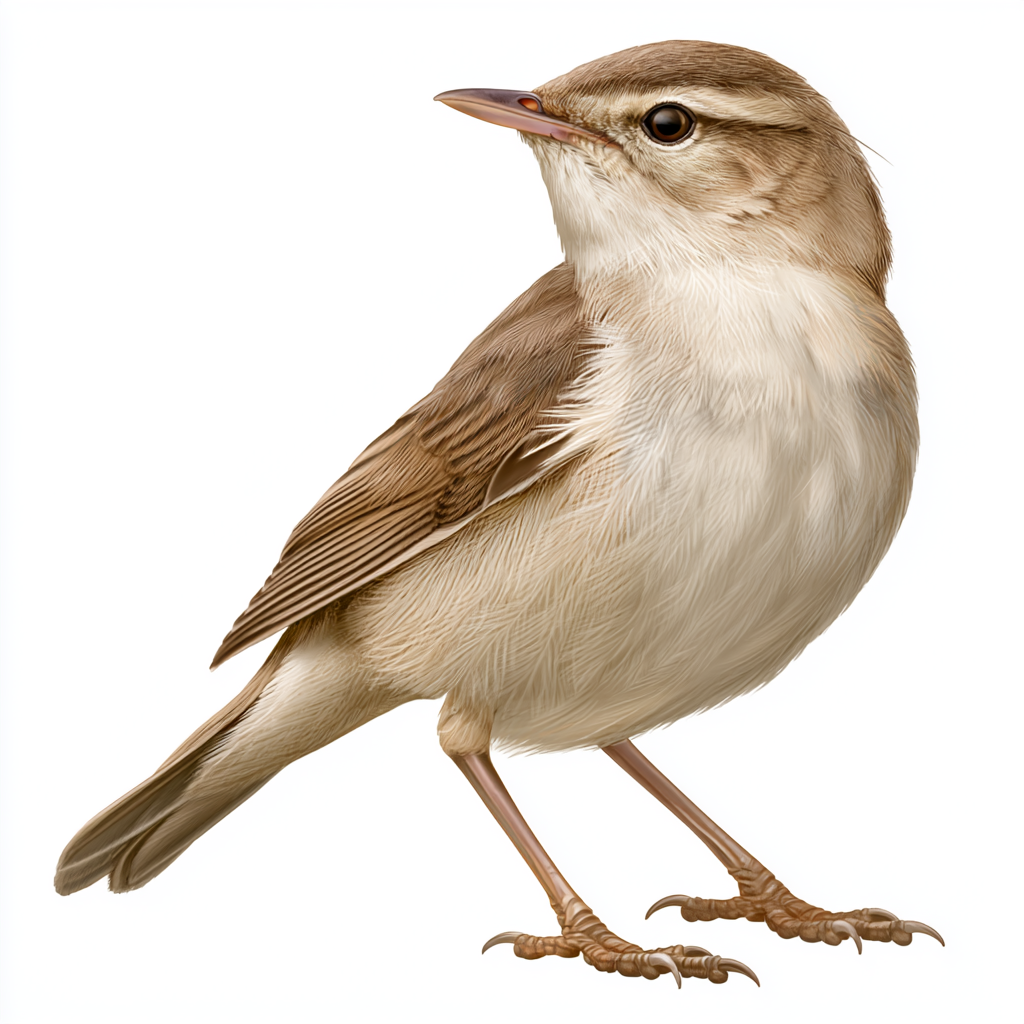
The Booted Warbler can be identified by its distinctive white eye-ring, pale yellowish-brown plumage, and lack of distinctive wing bars, which distinguish it from other similar warbler species. Its short, broad tail and rounded wings are also notable features.
The Booted Warbler is slightly smaller than a Willow Warbler, measuring around 10-12 cm in length, which is roughly the same size as a Goldcrest.
The male Booted Warbler has a pale yellowish-brown back and wings, with a pale yellow breast and belly, and a distinctive white eye-ring, with little to no seasonal variation in its plumage.
The female Booted Warbler is similar to the male, with a slightly duller and more subdued colouration, but overall, the sexes are alike in terms of plumage.
The Booted Warbler's call is a sharp, metallic "tek" or "tink" sound, while its song is a series of short, melodic phrases, often described as a repetitive, whistled tune.
The Booted Warbler is a skulking species, often feeding on insects and spiders in dense vegetation, and can be seen flitting between bushes and shrubs, with a distinctive, jerky flight style.
The Booted Warbler can be confused with the Sykes's Warbler, but can be distinguished by its shorter tail, more rounded wings, and lack of distinctive wing bars, as well as its different call and song.
Quick Facts
Who's spotted this?
Loading...
Recent community sightings
Loading recent sightings...