Short-toed Lark
Calandrella brachydactyla
The Short-toed Lark, specifically the Greater Short-toed Lark, is a rare migrant to Britain, typically seen during the spring and autumn migration periods, often in open, dry areas with short vegetation. It is more commonly found in southern Europe, northern Africa, and Asia, but occasional sightings have been recorded in the UK.
Field Identification Guide
Use these features to identify Short-toed Lark in the field.
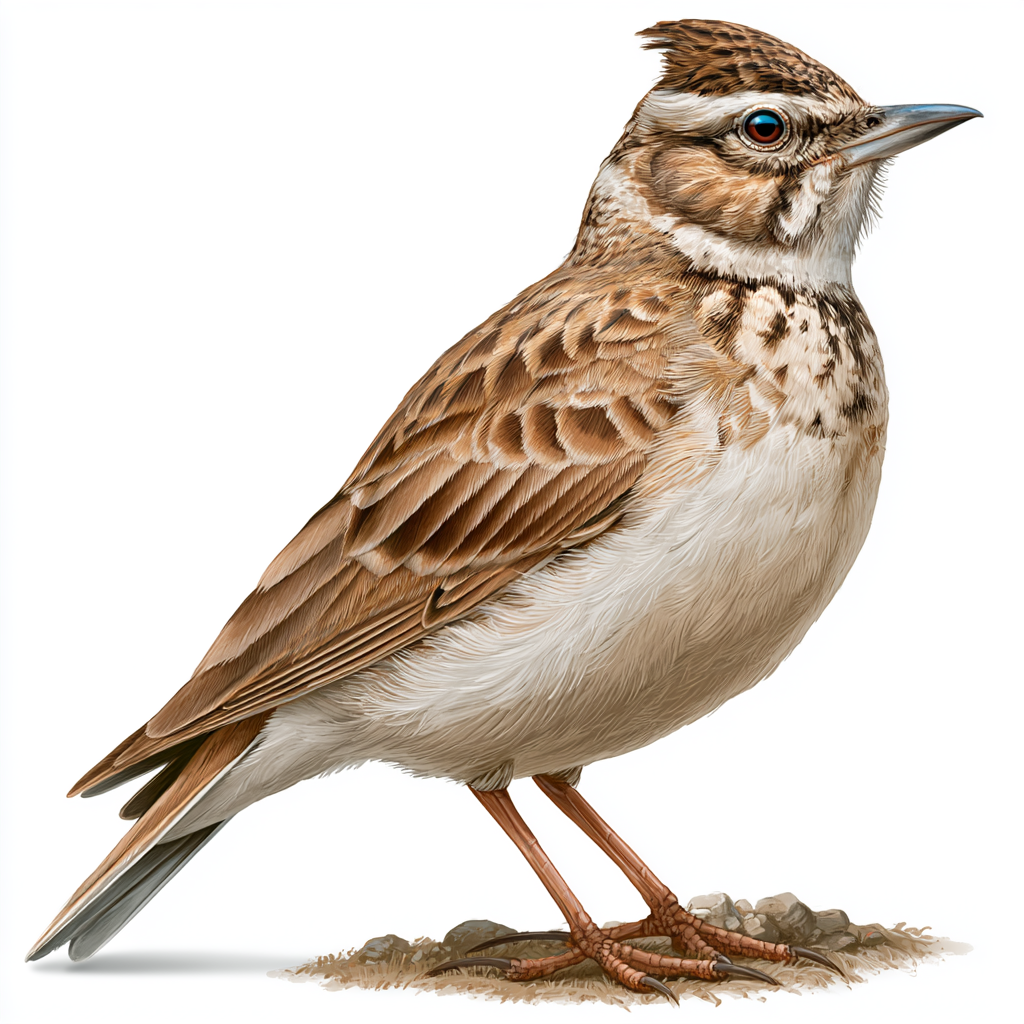
The Short-toed Lark can be identified by its streaked breast, white outer tail feathers, and a short, stout toe, with a distinctive white stripe above the eye and a dark stripe through the eye. Its brownish-grey plumage with a pale underside also helps distinguish it from other lark species.
The Short-toed Lark is slightly smaller than a Skylark, measuring around 12-14 cm in length, and is larger than a Meadow Pipit.
The male Short-toed Lark has a brownish-grey back and wings, with a pale underside and streaked breast, and a distinctive white stripe above the eye, with little seasonal variation in its plumage.
The female Short-toed Lark is similar to the male, with slightly duller colours and less distinct streaking on the breast.
The Short-toed Lark's call is a sharp, metallic "tek" or "tink" sound, often repeated in a series, while its song is a melodic, whistled phrase, typically sung from a low perch or in flight.
Short-toed Larks are ground-dwelling birds, feeding on small insects, seeds, and fruits, and are often seen running or walking on the ground, with a distinctive, upright posture and a swift, direct flight style.
The Short-toed Lark can be confused with the Skylark or the Crested Lark, but can be distinguished by its shorter toe, streaked breast, and white outer tail feathers, as well as its distinctive call and song.
Quick Facts
Who's spotted this?
Loading...
Recent community sightings
Loading recent sightings...