Great Tit
Parus major
The Great Tit is a common and widespread species in Britain, found in woodlands, gardens, and parks throughout the year, with its presence noticeable during the breeding season from March to August. It is a frequent visitor to garden bird feeders, particularly during the winter months.
Field Identification Guide
Use these features to identify Great Tit in the field.
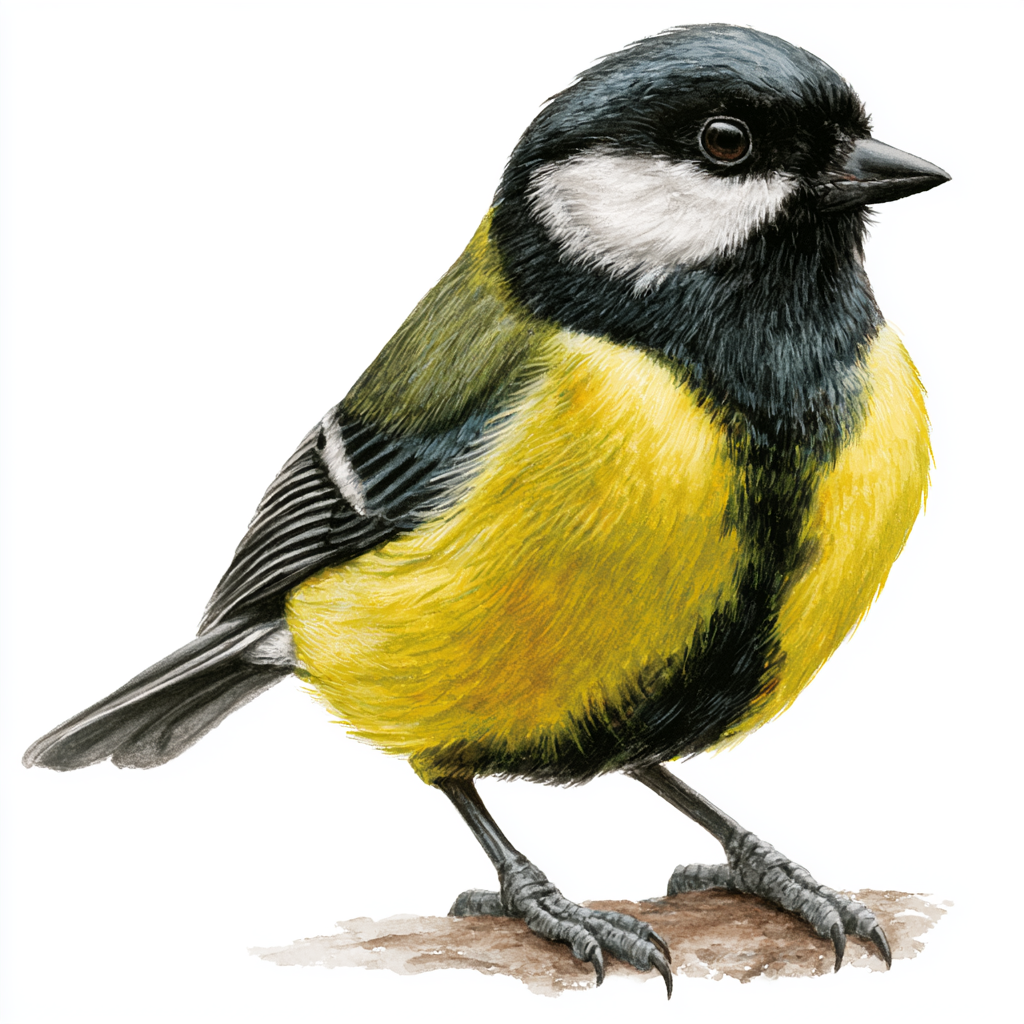
The Great Tit can be identified by its distinctive white cheeks, greenish-yellow wings, and a broad black stripe above its beak, as well as its yellow and green plumage with a white belly. Its black head with white cheeks is a key distinguishing feature, along with its yellow-green back.
The Great Tit is slightly larger than a Blue Tit, but smaller than a Starling, measuring around 10-12 centimetres in length.
The male Great Tit has a yellow, green, and white plumage, with a black stripe above its beak and a white belly, with no significant seasonal variation in its colouration.
The female Great Tit has similar plumage to the male, with slightly less intense colours, but is generally indistinguishable from the male.
The Great Tit's call is a distinctive, high-pitched "tee-cher" or "tsee" sound, often repeated in a series, while its song is a melodic, whistled phrase.
The Great Tit is an acrobatic bird, often seen flitting between branches and feeding on insects, seeds, and nuts, with a distinctive, bouncy flight style and a tendency to cache food for later use.
The Great Tit can be confused with the Blue Tit, but can be distinguished by its larger size, white cheeks, and broader black stripe above its beak, as well as its more yellowish-green plumage.
Quick Facts
Who's spotted this?
Loading...
Recent community sightings
Loading recent sightings...