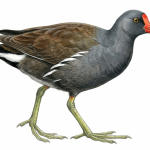
Little Egret
Egretta garzetta
The Little Egret is a rare but increasing visitor to Britain, particularly in the southern regions, often seen in coastal wetlands and estuaries during the summer months. It can be spotted in areas with shallow water, such as marshes and lagoons, where it feeds on small aquatic creatures.
Field Identification Guide
Use these features to identify Little Egret in the field.
The Little Egret is distinguished by its white plumage, slender black beak, and long black legs, with yellow feet in the western race. Its yellow feet and black legs are key identification features, along with its white neck and body.
The Little Egret is larger than a Blue Tit, but smaller than a Grey Heron, with a slender build that sets it apart from other heron species.
The male Little Egret has a predominantly white plumage, with a yellow patch on the forehead during the breeding season, and a slender black beak that contrasts with its white feathers.
The female Little Egret is similar to the male, with a white plumage and yellow feet, although the yellow patch on the forehead may be less pronounced or absent.
The Little Egret has a sharp, high-pitched call, often described as a loud "krek" or "frank", which is frequently heard during the breeding season or when the bird is alarmed.
The Little Egret is a wading bird that feeds in shallow water, using its long legs and sharp beak to catch small fish, crustaceans, and insects, and it is often seen walking slowly or standing still, scanning the water for prey.
The Little Egret can be confused with the Great White Egret, but it is smaller and has a more slender build, with a black beak and yellow feet, whereas the Great White Egret has a yellow beak and longer neck.
Quick Facts
Who's spotted this?
Loading...
Recent community sightings
Loading recent sightings...