Ivory Gull
Pagophila eburnea
The Ivory Gull is a rare and occasional visitor to Britain, typically seen in the northernmost parts of the country, particularly during the winter months when it may wander south from its Arctic breeding grounds. It is a highly sought-after sighting among British birders due to its infrequent appearances.
Field Identification Guide
Use these features to identify Ivory Gull in the field.
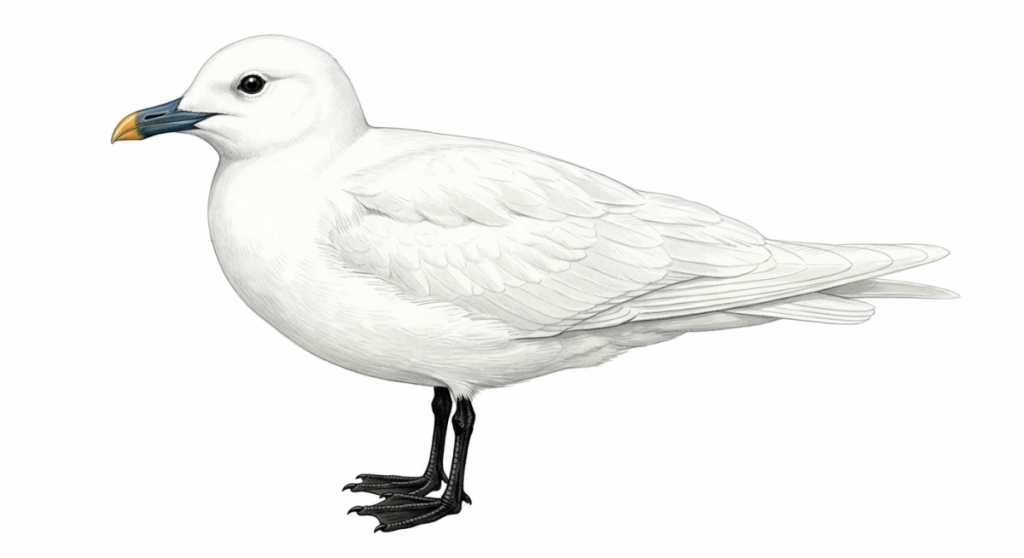
The Ivory Gull can be identified by its pure white plumage, black legs, and a distinctive yellow bill with a red tip, as well as its relatively small size and rounded head shape.
The Ivory Gull is slightly smaller than a Common Gull, but larger than a Black-headed Gull.
The male Ivory Gull has a pristine white plumage with no discernible markings or seasonal variation, giving it a distinctive and uniform appearance throughout the year.
The female Ivory Gull is similar to the male, with no notable differences in plumage or colouration.
The Ivory Gull's call is a high-pitched, nasal "kee-kee-kee" or "krek-krek-krek", often repeated in a series of short phrases.
Ivory Gulls are opportunistic feeders, often following polar bears and other predators to scavenge for carrion, and they can also be seen flying low over the water, searching for small fish and invertebrates to catch.
The Ivory Gull can be confused with other small gull species, such as the Little Gull or the Ross's Gull, but its pure white plumage and distinctive bill shape serve to distinguish it from these similar species.
Quick Facts
Who's spotted this?
Loading...
Recent community sightings
Loading recent sightings...