Pied-billed Grebe
Podilymbus podiceps
The Pied-billed Grebe is a rare visitor to Britain, typically seen on ponds and lakes, particularly during migration periods or as a vagrant. It is most likely to be spotted in the southern regions of England, although sightings are extremely uncommon.
Field Identification Guide
Use these features to identify Pied-billed Grebe in the field.
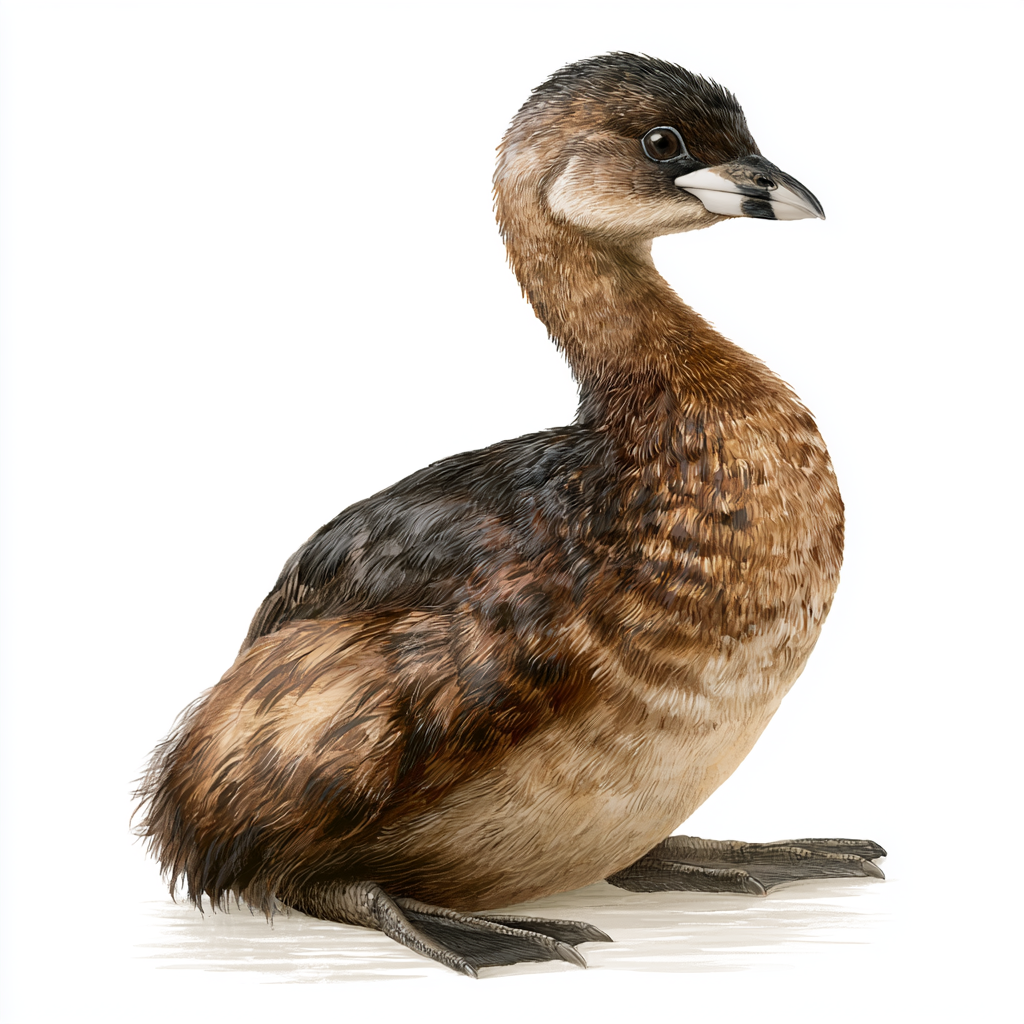
The Pied-billed Grebe can be identified by its distinctive black bill with a yellow edge, its greyish-brown back, and its white throat patch.
The Pied-billed Grebe is slightly smaller than a Moorhen, but larger than a Coot.
The male Pied-billed Grebe has a brown back, white belly, and a black stripe on its bill, with little seasonal variation in its plumage.
The female Pied-billed Grebe is similar to the male, with no significant differences in plumage.
The Pied-billed Grebe's call is a low, mournful whistle, often described as a slow, drawn-out "kuu-kuu-kuu".
Pied-billed Grebes are diving birds, feeding on aquatic insects, fish, and crustaceans, and are often seen swimming with their bodies partially submerged, or resting on the water's surface with their bills tucked in.
The Pied-billed Grebe can be confused with other grebe species, but its black bill with a yellow edge and greyish-brown back distinguish it from the Little Grebe and Great Crested Grebe, which have different bill colours and patterns.
Quick Facts
Who's spotted this?
Loading...
Recent community sightings
Loading recent sightings...