Long-toed Stint
Calidris subminuta
The Long-toed Stint is a rare migrant to Britain, typically seen during the spring and autumn, often in coastal wetlands and estuaries. It is a small wader that can be spotted in the UK, particularly in the eastern and southern regions, although sightings are infrequent.
Field Identification Guide
Use these features to identify Long-toed Stint in the field.
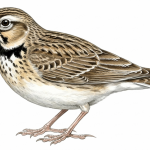
The Long-toed Stint can be identified by its long toes, particularly the hind toe, as well as its distinctive white V-shaped markings on its back and its dark brown crown and cheek patches. Its overall brownish-grey plumage with white underside is also a key feature.
The Long-toed Stint is smaller than a Starling, measuring around 13-15 cm in length, and is one of the smaller waders found in Britain.
The male Long-toed Stint has a brownish-grey back with white V-shaped markings, a dark brown crown, and a white underside with a faint breast band, with little to no seasonal variation in its plumage.
The female Long-toed Stint is similar to the male, with no significant differences in plumage, although females may have slightly duller colours.
The Long-toed Stint has a high-pitched, whistled call, often described as a sharp "pee-wee" or "ti-ti-ti" sound, which is usually heard during migration.
The Long-toed Stint is a ground-foraging bird that feeds on small invertebrates, often running or walking quickly while searching for food, and can be seen in flocks during migration, flying in a swift and direct manner.
The Long-toed Stint can be confused with the Little Stint, but can be distinguished by its longer hind toe and more distinctive white V-shaped markings on its back, as well as its darker crown and cheek patches.
Quick Facts
Who's spotted this?
Loading...
Recent community sightings
Loading recent sightings...