Penduline Tit
Remiz pendulinus
The Penduline Tit is a rare and irregular visitor to Britain, typically seen in the southern and eastern regions during the spring and autumn migrations. It is most often spotted in wetland areas, such as reed beds and marshes, where it can be found hanging from trees or shrubs.
Field Identification Guide
Use these features to identify Penduline Tit in the field.
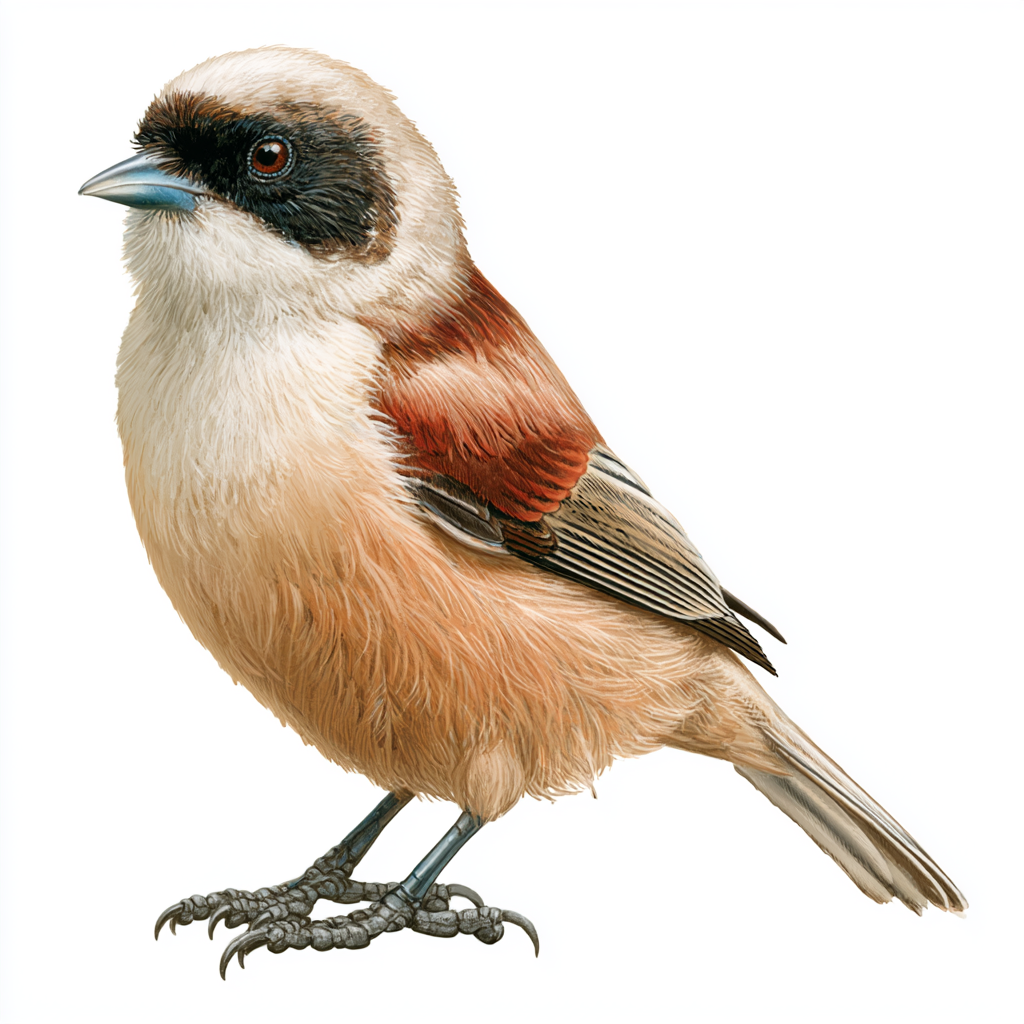
The Penduline Tit can be identified by its distinctive black and yellow head pattern, white throat patch, and long, pointed tail. Its grey-brown back and wings also help to distinguish it from other tit species.
The Penduline Tit is smaller than a Blue Tit, measuring around 10-12 cm in length.
The male Penduline Tit has a black head with a yellow forehead, white throat patch, and a grey-brown back and wings, with a distinctive black stripe above its eye.
The female Penduline Tit is similar to the male, but with a slightly duller colouration and a less pronounced black stripe above the eye.
The Penduline Tit has a high-pitched, tinkling call, often described as a series of descending notes, and a short, simple song.
The Penduline Tit is known for its acrobatic behaviour, often hanging upside down from branches as it forages for insects and spiders in vegetation, and its distinctive, pendulous nest-building habits.
The Penduline Tit can be confused with the Long-tailed Tit, but can be distinguished by its longer tail, more subdued colouration, and distinctive head pattern, as well as its preference for wetland habitats.
Quick Facts
Who's spotted this?
Loading...
Recent community sightings
Loading recent sightings...