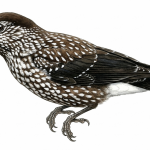
Ross’s Gull
Rhodostethia rosea
Ross's Gull is a rare and occasional visitor to Britain, typically seen during the winter months, particularly in the northern and eastern regions. It is a small, Arctic-breeding gull that is more commonly associated with the tundras of North America, Europe, and Asia.
Field Identification Guide
Use these features to identify Ross’s Gull in the field.
The Ross's Gull can be identified by its pale grey back, white wing tips, and a distinctive black neck ring, as well as its small size and rounded head. Its pale colouration and lack of white primaries are also key distinguishing features.
The Ross's Gull is smaller than a Black-headed Gull, but larger than a Little Gull, with a more slender build.
The male Ross's Gull has a pale grey back, white underside, and a black neck ring, with a pinkish wash on the breast and belly during the breeding season.
The female Ross's Gull is similar to the male, with a slightly duller colouration and a less pronounced black neck ring.
The Ross's Gull has a high-pitched, nasal call, often described as a sharp "kee-kee-kee" or "krek-krek-krek" sound.
Ross's Gulls are opportunistic feeders, often following other birds to scavenge for food, and can be seen flying low over the water with a swift, agile flight style.
The Ross's Gull can be confused with the Little Gull, but can be distinguished by its pale grey back, lack of white primaries, and a more slender build, as well as its distinctive black neck ring.
Quick Facts
Who's spotted this?
Loading...
Recent community sightings
Loading recent sightings...