Shore Lark
Eremophila alpestris
The Shore Lark is a rare winter visitor to Britain, typically seen on coastal shores and saltmarshes, particularly in the east and north of the country. It can be spotted from October to March, with the majority of sightings occurring during the colder months.
Field Identification Guide
Use these features to identify Shore Lark in the field.
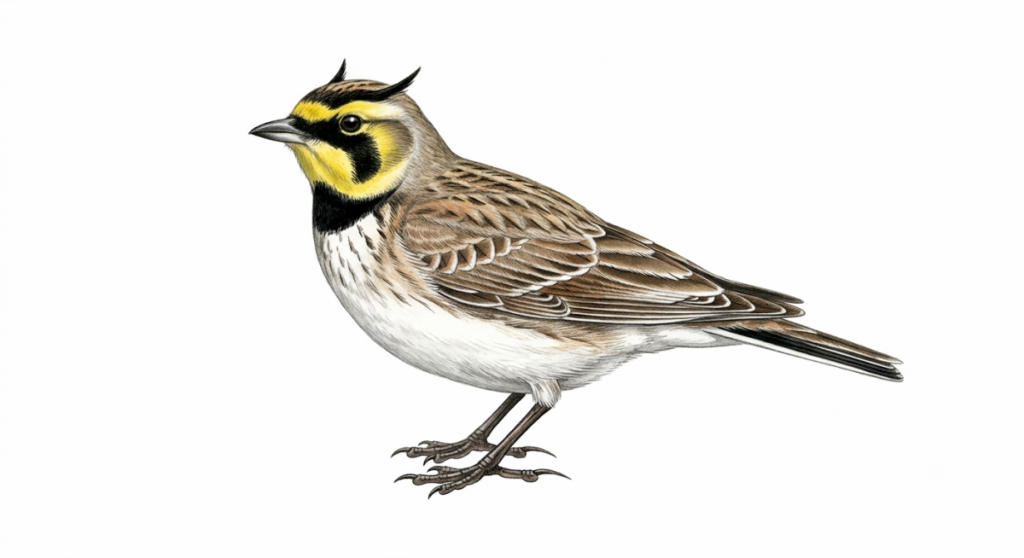
The Shore Lark can be identified by its distinctive black stripes on the head, white outer tail feathers, and a black patch on the breast, with a generally brownish-grey plumage. Its head pattern and white tail edges are key features to look out for.
The Shore Lark is slightly smaller than a Skylark, with a more compact build.
The male Shore Lark has a distinctive summer plumage, featuring a black stripe above the eye and a black patch on the breast, with a generally brownish-grey back and wings, although this plumage is rarely seen in Britain as the species is primarily a winter visitor.
The female Shore Lark has a similar plumage to the male, but with less pronounced head stripes and a generally duller colouration.
The Shore Lark's call is a sharp, high-pitched "tee" or "tsee", often repeated in a series, while its song is a melodious, whistled phrase.
Shore Larks are ground-dwelling birds, feeding on small invertebrates, seeds, and fruits, and can be seen running or walking on the ground in search of food, with a characteristic upright stance and rapid, jerky movements.
The Shore Lark can be confused with the Skylark, but can be distinguished by its black head stripes, white outer tail feathers, and a more compact build, as well as its preference for coastal habitats during the winter months.
Quick Facts
Who's spotted this?
Loading...
Recent community sightings
Loading recent sightings...