Spotted Crake
Porzana porzana
The Spotted Crake is a rare and elusive summer migrant to Britain, typically seen in wetland areas with dense vegetation, particularly in the southern and eastern regions, from May to July. It is a secretive bird, making it a challenging species to spot, even for experienced birdwatchers.
Field Identification Guide
Use these features to identify Spotted Crake in the field.
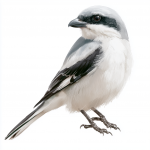
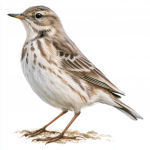
The Spotted Crake can be identified by its distinctive black and white spotted breast, brown back, and long, yellowish-green bill, as well as its reddish-brown legs and feet. Its overall appearance is compact and rounded, with a short tail.
The Spotted Crake is smaller than a Starling, measuring around 20-25 cm in length, and is larger than a Blue Tit.
The male Spotted Crake has a brown back, wings, and tail, with a black and white spotted breast and belly, and a blue-grey face and throat, with a distinctive white stripe above the eye.
The female Spotted Crake is similar to the male, but with a more subdued colouration, particularly on the breast and belly, where the spots are less distinct.
The Spotted Crake's call is a loud, whistled "whip" or "weet-weet-weet", often heard at night or during the breeding season, and is a key way to locate this secretive species.
The Spotted Crake is a skulking bird, feeding on small invertebrates, seeds, and aquatic plants in dense wetland vegetation, and is often seen walking or running through the undergrowth, rather than flying, which it does reluctantly and with a distinctive, erratic flight pattern.
The Spotted Crake can be confused with other crake species, such as the Baillon's Crake and the Little Crake, but can be distinguished by its larger size, more distinctive spotting on the breast, and the white stripe above the eye, as well as its habitat preferences and call.
Quick Facts
Who's spotted this?
Loading...
Recent community sightings
Loading recent sightings...