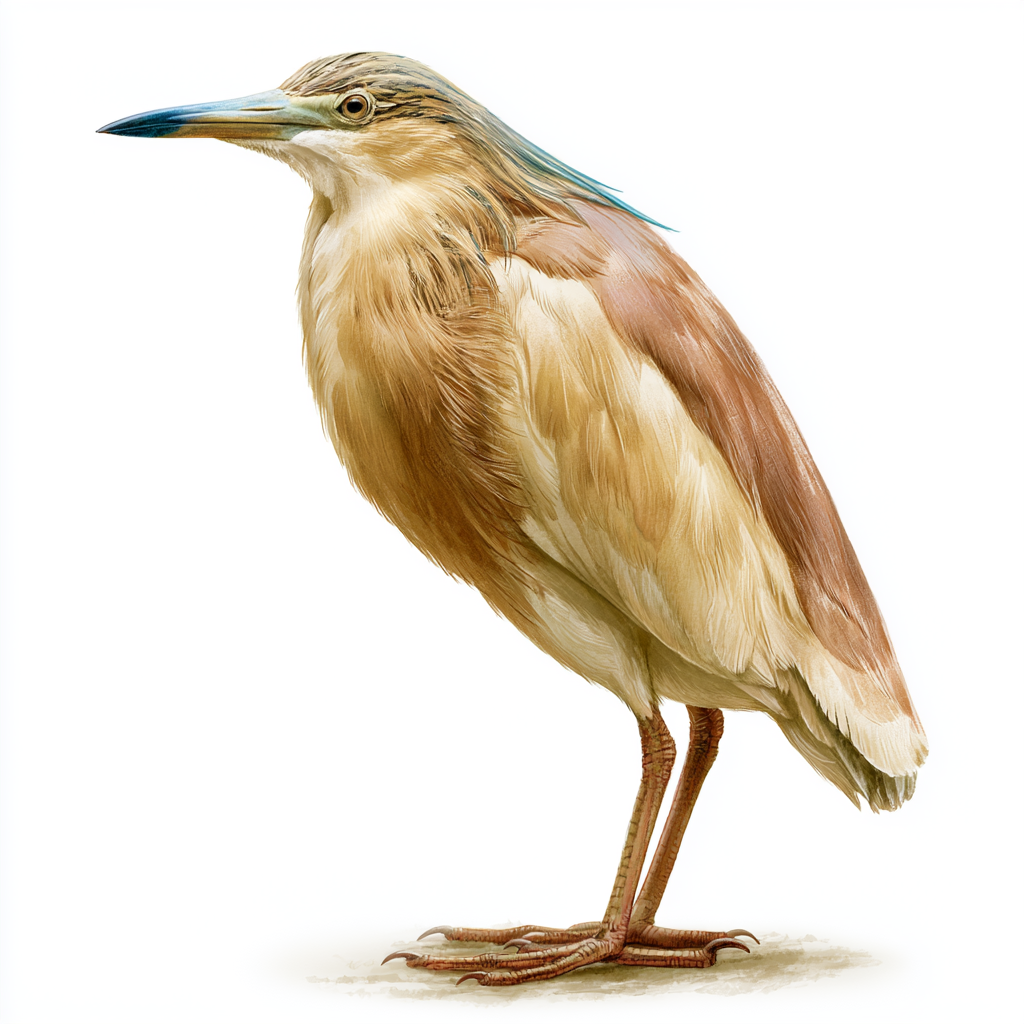
Squacco Heron
Ardeola ralloides
The Squacco Heron is a rare migrant to Britain, typically seen during the summer months, and is notable for its small size and distinctive breeding plumage. It is most likely to be spotted in southern England, particularly in wetland areas with abundant vegetation.
Field Identification Guide
Use these features to identify Squacco Heron in the field.
At a glance, the Squacco Heron can be identified by its grey and white plumage, long neck, and distinctive yellow beak, as well as its relatively small size and rounded wings.
The Squacco Heron is smaller than a Grey Heron, but larger than a Moorhen, with a compact body and relatively long legs.
The male Squacco Heron has a grey back and wings, with a white head, neck, and underparts, and a distinctive black stripe above its eye, with breeding plumage featuring long, wispy feathers on the back and neck.
The female Squacco Heron is similar to the male, with no significant differences in plumage, although the breeding feathers may be less pronounced.
The Squacco Heron's call is a sharp, high-pitched "krek" or "squawk", often repeated in a series of short, staccato bursts.
The Squacco Heron is a stealthy and patient hunter, wading slowly through shallow water to catch small fish, frogs, and insects, and is also known for its swift and agile flight.
The Squacco Heron can be confused with the Little Egret, but can be distinguished by its more compact body, shorter neck, and yellow beak, as well as its more subdued grey and white plumage.
Quick Facts
Who's spotted this?
Loading...
Recent community sightings
Loading recent sightings...


