Yellow Warbler
Setophaga aestiva
The Yellow Warbler is a rare migrant to Britain, typically seen during the spring and autumn migration periods, particularly in the southern and eastern parts of the country. It is a notable species due to its bright yellow plumage and distinctive song.
Field Identification Guide
Use these features to identify Yellow Warbler in the field.
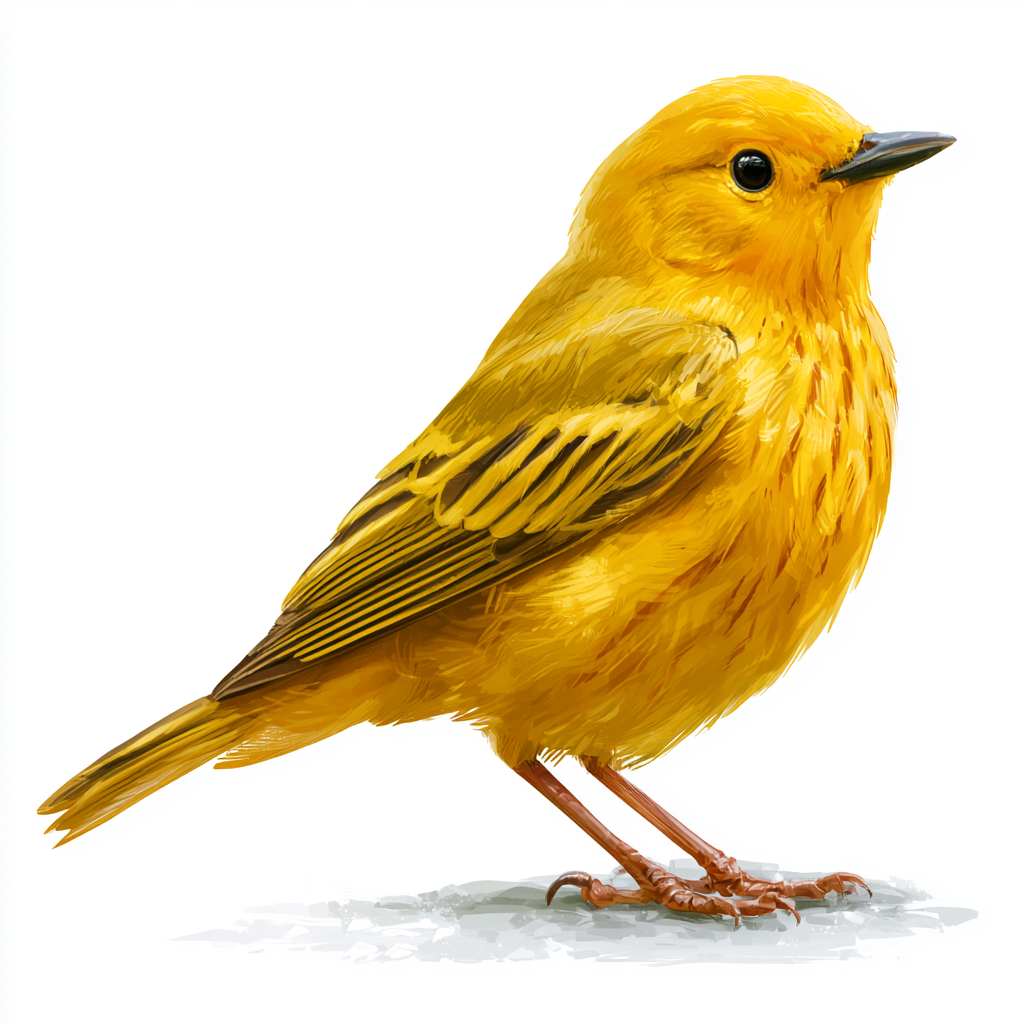
The Yellow Warbler can be identified by its bright yellow head and body, white wing bars, and a rounded tail with white outer feathers. Its yellow colouration and white wing bars distinguish it from other warbler species.
The Yellow Warbler is smaller than a House Sparrow, measuring approximately 10-11 cm in length.
The male Yellow Warbler has a bright yellow head, breast, and belly, with a greenish-yellow back and white wing bars, and its plumage remains relatively consistent throughout the year.
The female Yellow Warbler is similar to the male, but with a slightly duller yellow colouration, particularly on the head and breast.
The Yellow Warbler's song is a series of sweet, musical phrases, often described as "sweet-sweet-sweet" or "sweet-sweet-I'm-so-sweet", while its call is a sharp, metallic "chip" or "tick".
The Yellow Warbler is an active and agile species, often seen flitting between vegetation in search of insects and spiders, and its flight is characterized by a rapid, fluttering motion.
The Yellow Warbler can be confused with other yellow-plumaged warblers, such as the Willow Warbler or the Chiffchaff, but can be distinguished by its bright yellow colouration, white wing bars, and distinctive song.
Quick Facts
Who's spotted this?
Loading...
Recent community sightings
Loading recent sightings...