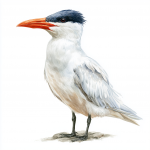
Thick-billed Warbler
Arundinax aedon
The Thick-billed Warbler is a rare vagrant to Britain, with only a few recorded sightings, typically during migration periods. It is most likely to be seen in the eastern and southern regions of the country, although such encounters are extremely uncommon.
Field Identification Guide
Use these features to identify Thick-billed Warbler in the field.
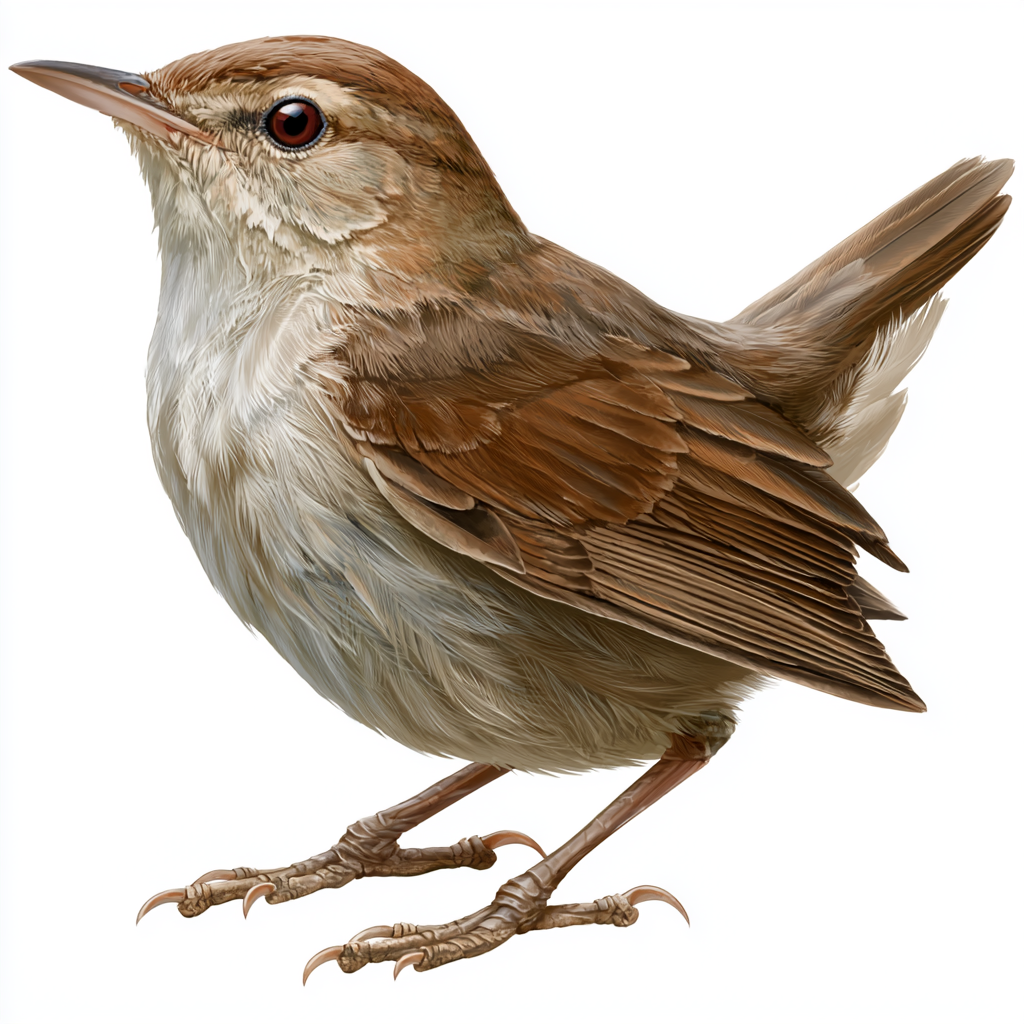
The Thick-billed Warbler can be identified by its distinctive thick bill, pale yellow-brown plumage, and white underside with brown streaks. Its rounded head and short tail are also notable features.
The Thick-billed Warbler is slightly smaller than a House Sparrow, making it a relatively compact bird.
The male Thick-billed Warbler has a brown back and wings, with a pale yellow-brown breast and belly, featuring brown streaks on its white underside, although detailed information on seasonal variation is limited.
Similar to the male, with no distinct differences recorded in available literature.
The Thick-billed Warbler's call is a sharp, metallic "tik" or "tink" sound, although its song is not commonly described in British contexts due to its rarity.
The Thick-billed Warbler is an insectivorous bird that forages for food in dense vegetation, often flying low to the ground with a swift, direct flight style.
The Thick-billed Warbler might be confused with other warbler species, such as the Reed Warbler or Sedge Warbler, but its thick bill and distinctive plumage patterns help to distinguish it from these similar species.
Quick Facts
Who's spotted this?
Loading...
Recent community sightings
Loading recent sightings...