Wheatear
Oenanthe oenanthe
The Wheatear is a migratory species that can be seen in Britain during the spring and autumn, typically in open countryside, coastal areas, and moorlands, with the majority of sightings occurring during their passage to and from their breeding grounds in the north. They are a relatively common sight in Britain during these periods, with thousands of individuals passing through the country.
Field Identification Guide
Use these features to identify Wheatear in the field.
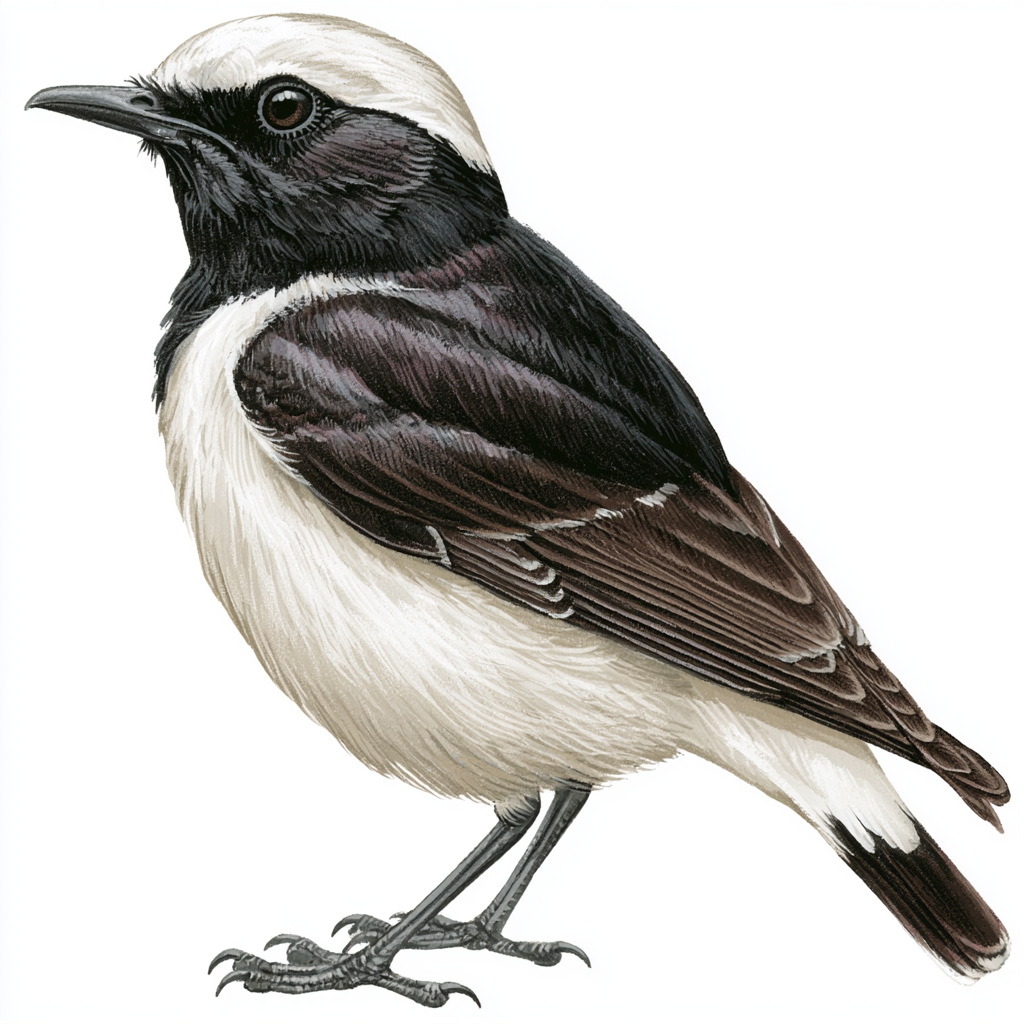
The Wheatear can be identified at a glance by its distinctive white rump patch, grey back, and black wings with white wing bars, as well as its upright posture and long tail. Its white underside and black throat patch also help to distinguish it from other similar species.
The Wheatear is slightly smaller than a Starling, with a length of around 12-14 cm, making it a medium-sized passerine bird.
The male Wheatear has a grey back, white underside, and a black throat patch, with a white rump patch and white wing bars, and its plumage remains relatively consistent throughout the year, although it may appear more worn and faded after the breeding season.
The female Wheatear is similar to the male, but with a browner tint to the back and a less pronounced black throat patch, making it slightly more difficult to distinguish from other similar species.
The Wheatear's call is a sharp, whistled "weet-weet-weet" or "chak-chak-chak", while its song is a series of melodic whistles and chirps, often sung from a prominent perch.
Wheatears are ground-foraging birds that feed on insects, spiders, and other small invertebrates, and can often be seen running or hopping across the ground in search of food, with a distinctive flight style that involves rapid wingbeats and long glides.
The Wheatear can be confused with other chat species, such as the Stonechat and the Whinchat, but can be distinguished by its white rump patch and black throat patch, as well as its more upright posture and longer tail.
Quick Facts
Who's spotted this?
Loading...
Recent community sightings
Loading recent sightings...