Whimbrel
Numenius phaeopus
The Whimbrel is a migratory wader that can be seen in Britain during its passage to and from its breeding grounds in the subarctic Palearctic region, with sightings most common in the spring and autumn. It is a rare breeder in Scotland, but can be found in small numbers in the UK's northern and western coastal areas.
Field Identification Guide
Use these features to identify Whimbrel in the field.
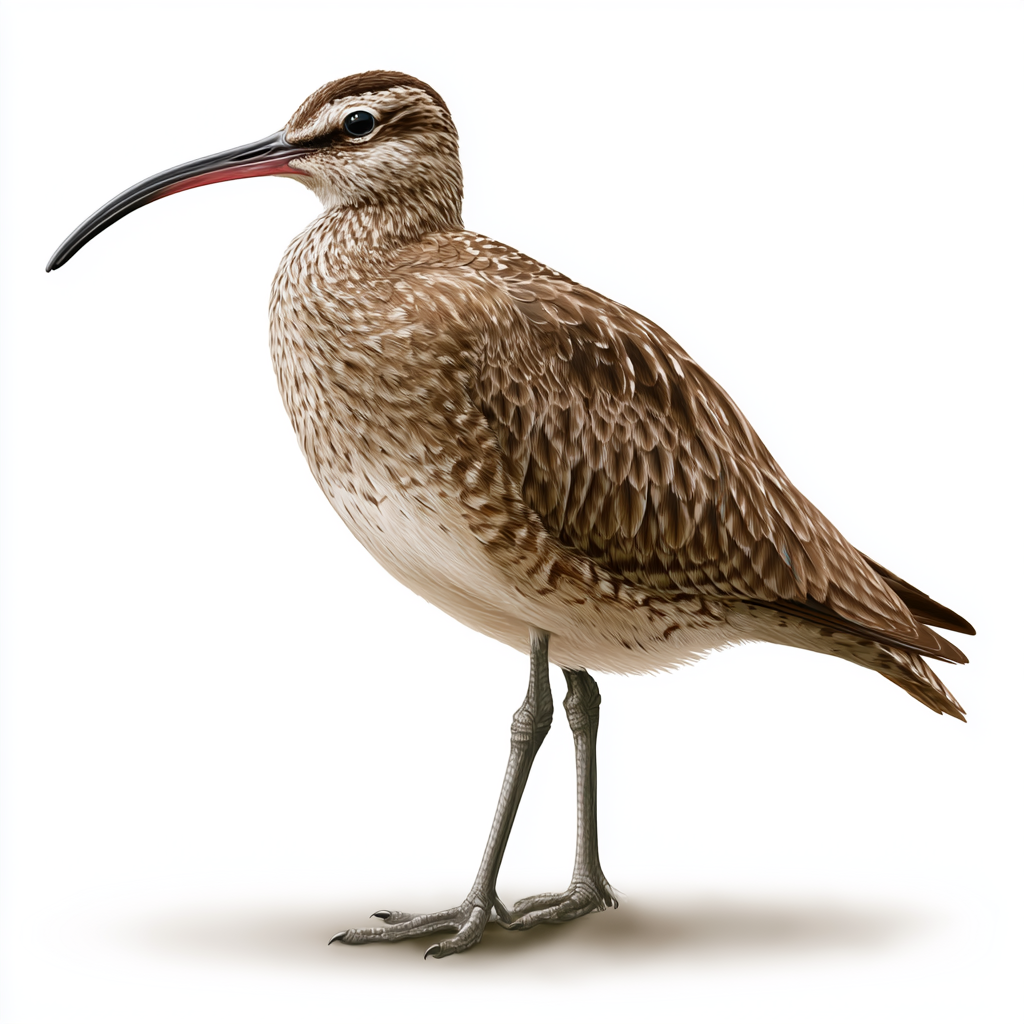
The Whimbrel can be identified by its distinctive curved bill, mottled brown plumage, and white rump patch, as well as its striped crown and pale supercilium. Its long legs and slender body shape also help to distinguish it from other waders.
The Whimbrel is slightly larger than a Redshank, but smaller than a Curlew, with a length of around 37-45 cm.
The male Whimbrel has a mottled brown back and wings, with a pale brown breast and belly, and a white rump patch, with little seasonal variation in its plumage.
The female Whimbrel is similar to the male, with no significant differences in plumage.
The Whimbrel's call is a distinctive, whistling "weet-weet-weet" or "whim-brul" sound, often heard during migration.
Whimbrels are migratory birds that feed on small invertebrates, such as crustaceans and insects, in coastal areas, and are known for their swift, direct flight and their habit of gathering in large flocks during migration.
The Whimbrel can be confused with the Curlew, but can be distinguished by its smaller size, curved bill, and white rump patch, as well as its more mottled plumage and distinctive call.
Quick Facts
Who's spotted this?
Loading...
Recent community sightings
Loading recent sightings...