White-winged Lark
Alauda leucoptera
The White-winged Lark is a rare vagrant to western Europe, including Britain, where it may be spotted during migration periods, typically in the autumn or winter. It is most likely to be seen in the southern and eastern parts of the country, although sightings are extremely uncommon.
Field Identification Guide
Use these features to identify White-winged Lark in the field.
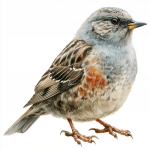
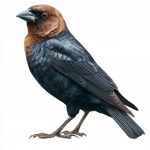
The White-winged Lark can be identified by its distinctive white wing bars, brownish-grey upperparts, and pale underside with dark streaks. Its white outer tail feathers and white edges to the tail are also notable features.
The White-winged Lark is slightly smaller than a Skylark, with a more compact build.
The male White-winged Lark has a brownish-grey back and wings, with a pale buff-coloured breast and belly streaked with dark brown, and a white wing bar that gives the species its name.
The female White-winged Lark is similar to the male, with slightly duller plumage and less pronounced streaking on the breast and belly.
The White-winged Lark's call is a sharp, metallic "tek" or "tink", while its song is a melodic, whistled phrase often given in flight.
White-winged Larks are ground-dwelling birds that feed on seeds, insects, and small invertebrates, often running or walking to catch their prey, and taking to the air with a swift, direct flight when disturbed.
The White-winged Lark can be confused with the Crested Lark or the Skylark, but can be distinguished by its white wing bars and lack of a crest, as well as its more compact build and darker, more streaked underside.
Quick Facts
Who's spotted this?
Loading...
Recent community sightings
Loading recent sightings...