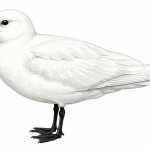
Isabelline Wheatear
Oenanthe isabellina
The Isabelline Wheatear is a rare vagrant to western Europe, including Britain, where it may be spotted during migration periods, typically in open countryside and steppe-like habitats. It is most likely to be seen in the UK during the spring or autumn, when individuals may become misplaced during their journeys between breeding and wintering grounds.
Field Identification Guide
Use these features to identify Isabelline Wheatear in the field.
The Isabelline Wheatear can be identified by its pale brown back, white throat, and distinctive white eye ring, as well as its upright posture and long legs. Its overall pale colouration and lack of distinctive markings also help to distinguish it from other wheatear species.
The Isabelline Wheatear is slightly smaller than a Starling, with a more slender build and longer legs.
The male Isabelline Wheatear has a pale brown back, wings, and tail, with a white throat, belly, and undertail coverts, and a greyish-brown crown and nape, with little seasonal variation in its plumage.
The female Isabelline Wheatear is similar to the male, with a slightly more subdued colouration, but overall the sexes are similar in appearance.
The Isabelline Wheatear's call is a sharp, metallic "tek" or "chak" sound, often repeated in a series, while its song is a melodic, whistled phrase, typically given from a prominent perch.
The Isabelline Wheatear is an insectivorous bird that feeds on the ground, using its long legs to run and chase after prey, and is also known to make short flights in pursuit of flying insects, often returning to a favourite perch to survey its surroundings.
The Isabelline Wheatear may be confused with other wheatear species, such as the Northern Wheatear, but can be distinguished by its pale brown back, white throat, and lack of distinctive markings, as well as its more upright posture and longer legs.
Quick Facts
Who's spotted this?
Loading...
Recent community sightings
Loading recent sightings...