Buff-bellied Pipit
Anthus rubescens
The Buff-bellied Pipit is a rare migrant to Britain, typically seen during the autumn and winter months, with most sightings occurring in the western and northern parts of the country. It is a small songbird that can be found in a variety of habitats, including wetlands, grasslands, and coastal areas.
Field Identification Guide
Use these features to identify Buff-bellied Pipit in the field.
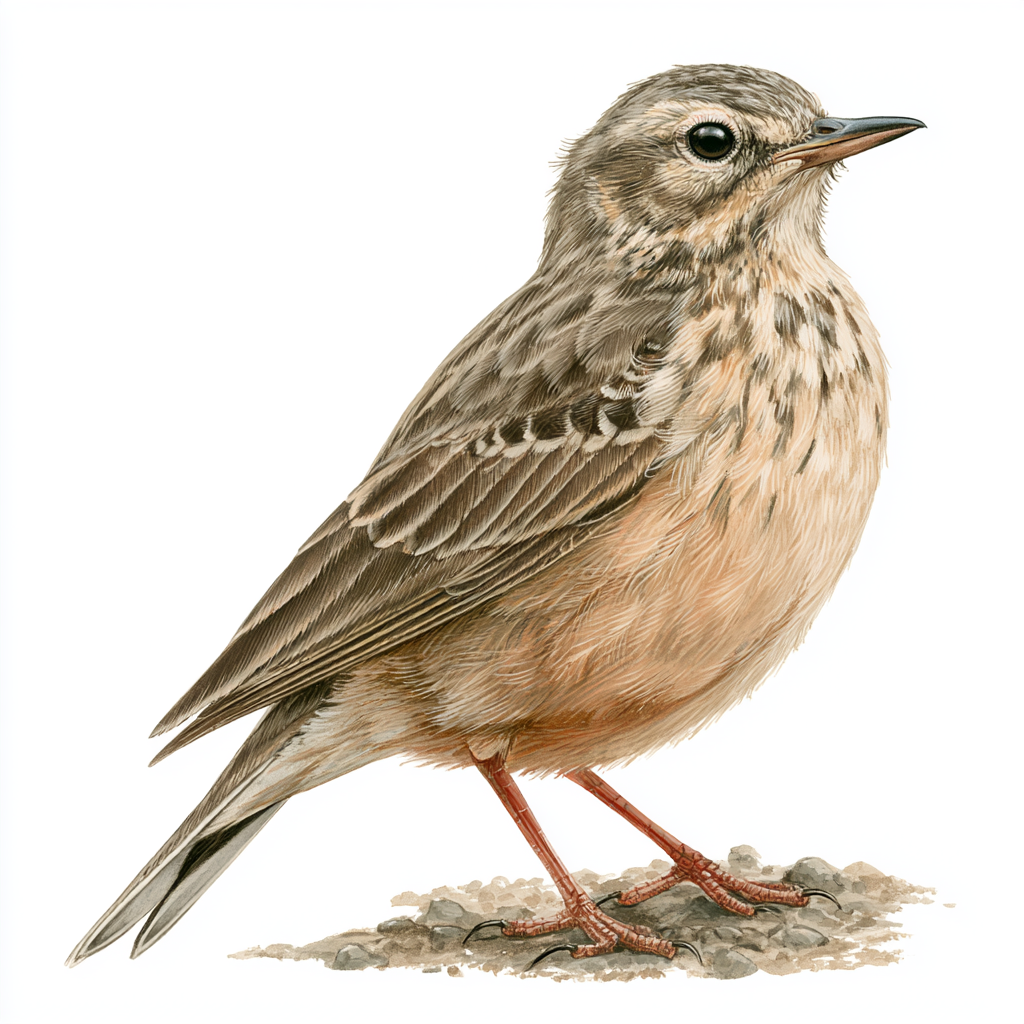
The Buff-bellied Pipit can be identified by its buff-coloured breast and belly, white outer tail feathers, and distinctive black stripes on its back. Its overall plumage is a mix of brown and grey, with a streaked appearance on its chest and flanks.
The Buff-bellied Pipit is slightly smaller than a Meadow Pipit, and larger than a Blue Tit.
The male Buff-bellied Pipit has a distinctive buff-coloured breast and belly, with a greyish-brown back and wings, and white outer tail feathers, with some seasonal variation in the intensity of the buff colouration.
The female Buff-bellied Pipit is similar to the male, with a slightly duller and more subdued colouration, but overall the same pattern and markings.
The Buff-bellied Pipit's call is a series of high-pitched, whistled notes, often described as a sharp "chee" or "chip" sound, while its song is a more melodious and repetitive phrase.
The Buff-bellied Pipit is a ground-dwelling bird that feeds on small invertebrates, seeds, and fruits, often running or walking on the ground in search of food, and taking to flight in a swift and direct manner when disturbed.
The Buff-bellied Pipit can be confused with other pipit species, such as the Meadow Pipit and the Rock Pipit, but can be distinguished by its buff-coloured breast and belly, and white outer tail feathers, as well as its more slender build and longer legs.
Quick Facts
Who's spotted this?
Loading...
Recent community sightings
Loading recent sightings...