Sulphur-bellied Warbler
Phylloscopus griseolus
The Sulphur-bellied Warbler is a rare migrant to Britain, typically seen during the spring and autumn periods, and is more commonly associated with the Palearctic region. It is a noteworthy sighting in the UK, often requiring careful identification to distinguish from other warbler species.
Field Identification Guide
Use these features to identify Sulphur-bellied Warbler in the field.
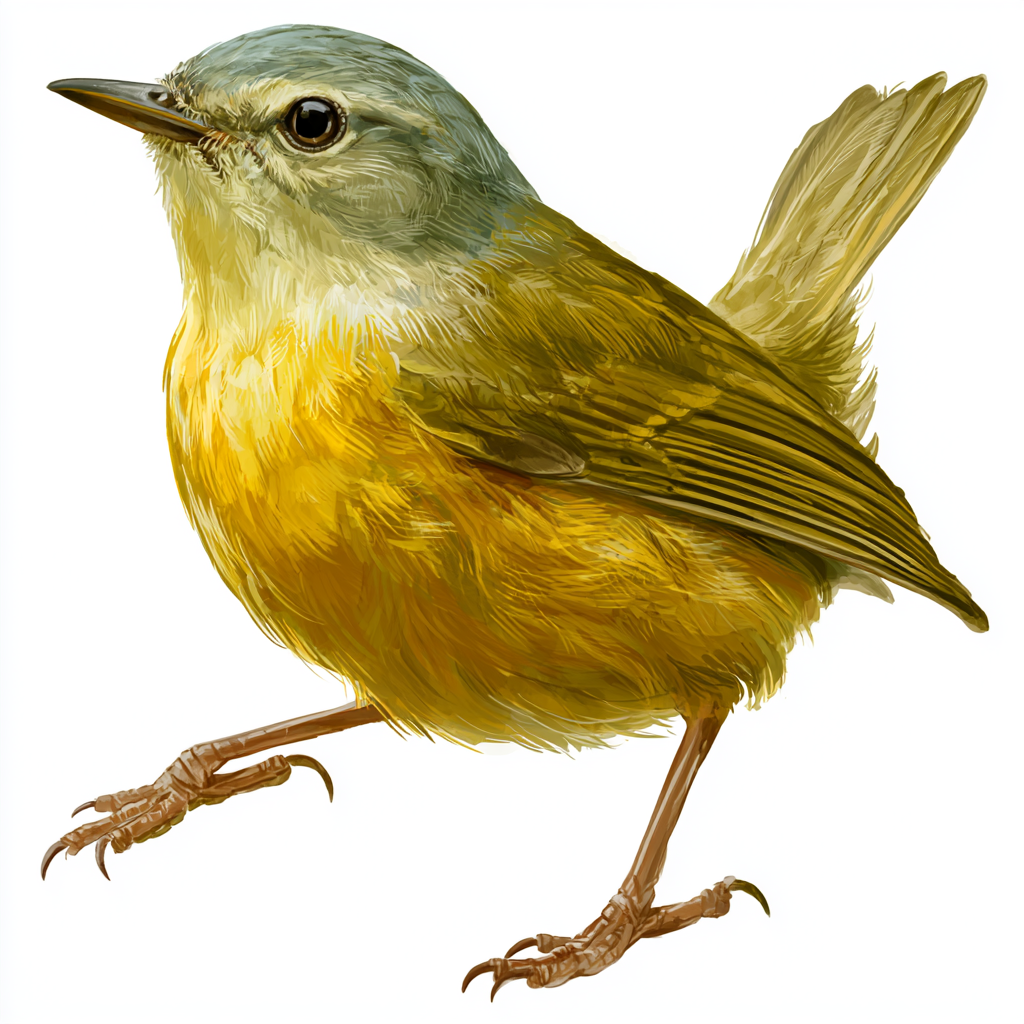
The Sulphur-bellied Warbler can be identified by its distinctive yellowish-buff belly, pale yellow supercilium, and brownish-grey upperparts, which set it apart from other leaf-warblers.
The Sulphur-bellied Warbler is smaller than a Starling, measuring around 10-12 cm in length, and is comparable in size to other small warblers.
The male Sulphur-bellied Warbler has a greyish-brown back, wings, and tail, with a yellowish-buff belly and pale yellow supercilium, although the plumage can appear more subdued outside of the breeding season.
The female Sulphur-bellied Warbler is similar to the male, with a similar greyish-brown and yellowish-buff colouration, although the tones may be slightly less vibrant.
The Sulphur-bellied Warbler's call is a sharp, high-pitched "tzeep" or "tzit", often repeated in a series, while its song is a melodic, whistled phrase.
The Sulphur-bellied Warbler is an active, agile bird that forages for insects and spiders in dense vegetation, often flitting between branches and making short, darting flights.
The Sulphur-bellied Warbler can be confused with the Yellow-browed Warbler or the Hume's Warbler, but can be distinguished by its distinctive yellowish-buff belly and pale yellow supercilium, as well as its greyish-brown upperparts.
Quick Facts
Who's spotted this?
Loading...
Recent community sightings
Loading recent sightings...