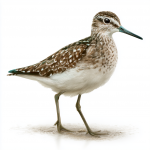
Egyptian Goose
Alopochen aegyptiaca
The Egyptian Goose is a non-native species to Britain, but can be spotted in the wild, particularly in southern England, having been introduced as an ornamental bird. It can be seen in Britain throughout the year, with sightings most common in parks, lakes, and wetlands.
Field Identification Guide
Use these features to identify Egyptian Goose in the field.
The Egyptian Goose can be identified by its distinctive brown and grey plumage, orange-brown legs, and a prominent pale brown patch on its forehead. Its black neck and white wing patches are also notable features.
The Egyptian Goose is larger than a Mallard, but smaller than a Greylag Goose.
The male Egyptian Goose has a grey-brown back, white belly, and a black neck with a white patch on the forehead, with no significant seasonal variation in its plumage.
The female Egyptian Goose is similar to the male, with slight variations in the intensity of the plumage colours, but overall, the female's plumage is almost indistinguishable from that of the male.
The Egyptian Goose has a loud, honking call, often described as a loud, cackling "kah-kah-kah" or "honk-honk-honk".
Egyptian Geese are herbivores, feeding on grasses, leaves, and aquatic plants, and can be seen walking on land or swimming in wetlands, with a distinctive waddling gait and a strong, direct flight style.
The Egyptian Goose can be confused with other goose species, such as the Greylag Goose or the Canada Goose, but can be distinguished by its smaller size, black neck, and distinctive forehead patch.
Quick Facts
Who's spotted this?
Loading...
Recent community sightings
Loading recent sightings...