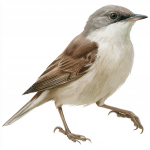
European Shag
Gulosus aristotelis
The European Shag is a familiar sight around Britain's rocky coastlines, particularly in the west and south, where it can be seen throughout the year, with some birds remaining in their breeding areas even in winter. It is a common breeding species in Britain, with colonies found on coastal cliffs and islands.
Field Identification Guide
Use these features to identify European Shag in the field.
The European Shag can be identified at a glance by its sleek black plumage, distinctive yellow throat patch, and long, curved neck, as well as its relatively small size compared to other cormorants.
The European Shag is slightly smaller than a Cormorant, but larger than a Guillemot.
The male European Shag has a glossy black plumage, with a distinctive yellow patch on its throat and a purple sheen to its feathers, particularly during the breeding season.
The female European Shag is similar to the male, with the same glossy black plumage and yellow throat patch.
The European Shag has a harsh, grunting call, often described as a loud "kraa" or "graa", which is typically heard during the breeding season.
European Shags are skilled divers, feeding on fish and crustaceans in the sea, and can be seen flying low over the water with their necks stretched out, or perched on rocks, drying their wings.
The European Shag can be confused with the Great Cormorant, but can be distinguished by its smaller size, more slender neck, and distinctive yellow throat patch, which is absent in the Great Cormorant.
Quick Facts
Who's spotted this?
Loading...
Recent community sightings
Loading recent sightings...