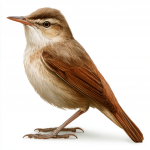
Great Blue Heron
Ardea herodias
The Great Blue Heron is a rare vagrant to Britain, occasionally spotted near coastal wetlands and shores, particularly during migration periods. It is most likely to be seen in the UK as a solitary individual, often causing excitement among birdwatchers due to its large size and distinctive plumage.
Field Identification Guide
Use these features to identify Great Blue Heron in the field.
The Great Blue Heron can be identified by its slate-grey back and wings, white head and neck with a black stripe above the eye, and a long, yellowish bill. Its slow and deliberate movements, as well as its distinctive neck shape, also help to distinguish it from other heron species.
The Great Blue Heron is larger than a Grey Heron, with adults reaching lengths of up to 130 cm, making it one of the largest heron species to be seen in Britain.
The male Great Blue Heron has a slate-grey back and wings, with a white head and neck, and a black stripe above the eye, while its breast and belly are a pale grey-blue colour, with a reddish-brown throat patch during the breeding season.
Similar to the male, with no significant differences in plumage, although females may appear slightly duller in colouration.
The Great Blue Heron's call is a deep, guttural "fraaank" or "kraaak", often heard during flight or when alarmed, while its song is a series of low, croaking notes.
The Great Blue Heron is a wading bird that feeds on fish, frogs, and small aquatic animals, using its long bill to spear prey in shallow water, and is known for its slow and deliberate movements, both in flight and when foraging.
The Great Blue Heron can be confused with the Grey Heron, but can be distinguished by its slate-grey back and wings, as well as its black stripe above the eye, whereas the Grey Heron has a more uniform grey plumage and lacks the black stripe.
Quick Facts
Who's spotted this?
Loading...
Recent community sightings
Loading recent sightings...