Pectoral Sandpiper
Calidris melanotos
The Pectoral Sandpiper is a rare migrant to Britain, typically seen during the autumn, with most sightings occurring in the western and northern parts of the country. It can be spotted in a variety of wetland habitats, including estuaries, marshes, and muddy pools.
Field Identification Guide
Use these features to identify Pectoral Sandpiper in the field.
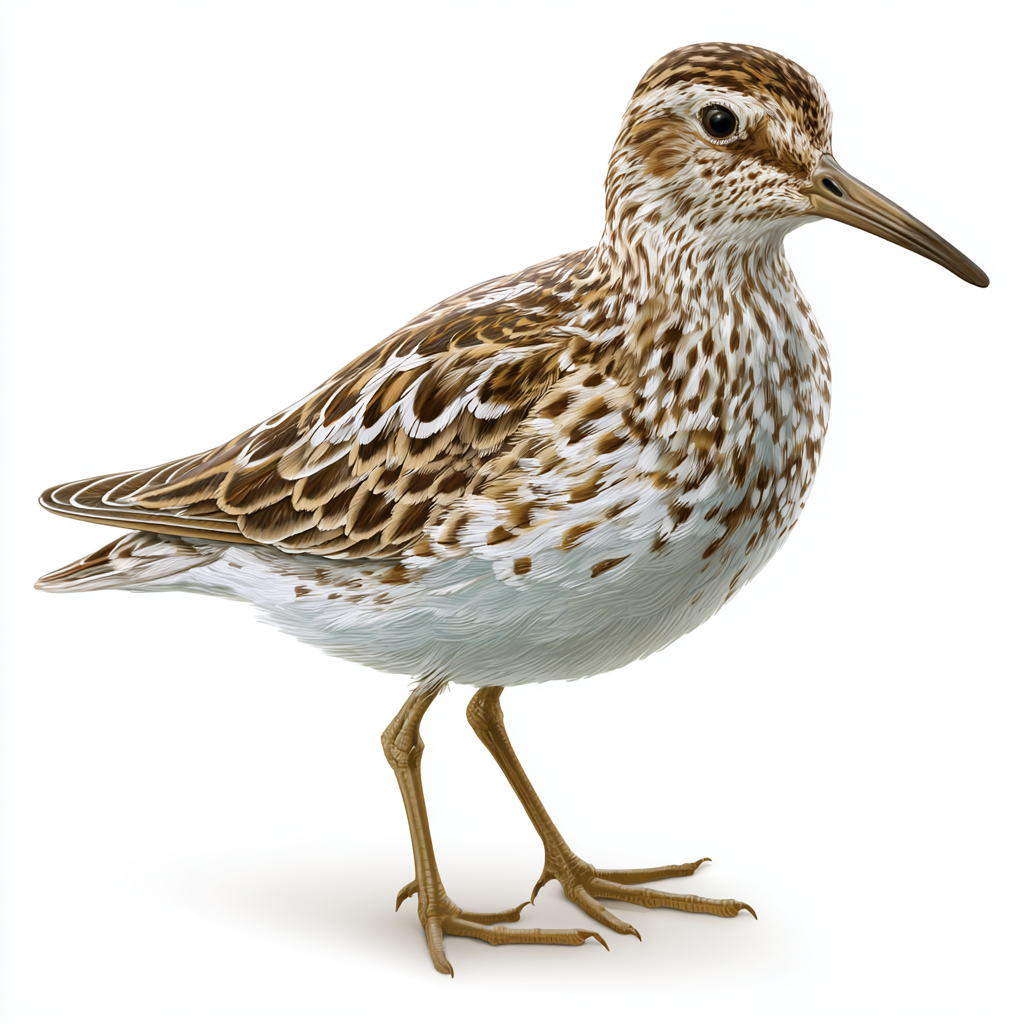
The Pectoral Sandpiper can be identified by its streaked breast, distinctive yellowish legs, and a sharp demarcation between the breast and belly. Its brownish-grey upperparts and white underside also help to distinguish it from other sandpiper species.
The Pectoral Sandpiper is smaller than a Starling, measuring approximately 19-23 cm in length, with a wingspan of 38-46 cm.
The male Pectoral Sandpiper has a brownish-grey back and wings, with a streaked breast and white belly, and its plumage remains relatively consistent throughout the year, although it may appear more worn and faded in the summer months.
The female Pectoral Sandpiper is similar to the male, with no significant differences in plumage, although females may appear slightly duller in colour.
The Pectoral Sandpiper's call is a sharp, whistled "chu-chu-chu" or "whit-whit-whit", often repeated in a series of short phrases.
Pectoral Sandpipers are active feeders, probing into mud and wet soil for small invertebrates, and they can be seen running and stopping abruptly as they search for food, often with a distinctive "teetering" motion.
The Pectoral Sandpiper can be confused with the Curlew Sandpiper, but it can be distinguished by its streaked breast, yellowish legs, and more compact body shape, as well as its lack of a long, curved bill.
Quick Facts
Who's spotted this?
Loading...
Recent community sightings
Loading recent sightings...