Purple Sandpiper
Calidris maritima
The Purple Sandpiper is a rare but regular winter visitor to Britain, typically seen on rocky coastlines and estuaries, particularly in the north and west. It can be spotted from October to March, with the largest numbers usually found during the winter months.
Field Identification Guide
Use these features to identify Purple Sandpiper in the field.
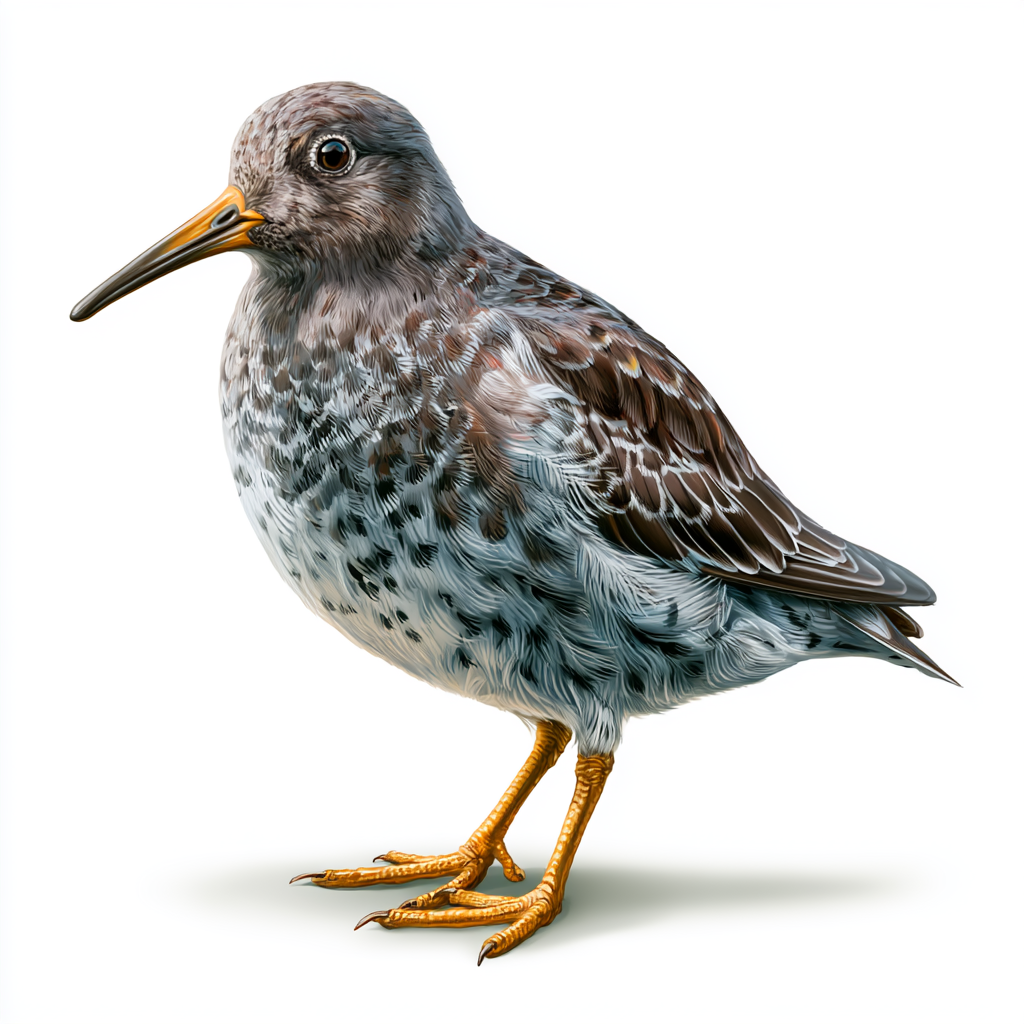
At a glance, the Purple Sandpiper can be identified by its stocky build, yellowish legs, and distinctive black stripe that runs across its forehead, with a brownish-grey back and wings.
The Purple Sandpiper is slightly smaller than a Starling, with a more compact body.
The male Purple Sandpiper has a greyish-brown plumage with a purplish sheen in the right light, particularly on its back and wings, and a white belly, with little seasonal variation.
The female Purple Sandpiper is similar to the male, with the same greyish-brown plumage and white belly.
The Purple Sandpiper's call is a sharp, high-pitched "weet" or "wit" sound, often repeated in a series of three or four notes.
Purple Sandpipers are typically found feeding on rocky shores and in estuaries, where they search for small invertebrates and algae, often running or jumping between rocks to catch their prey, and they have a distinctive, bobbing flight style.
The Purple Sandpiper can be confused with the Turnstone, but it can be distinguished by its lack of bright colouration and distinctive black stripe across its forehead, as well as its more compact build and yellowish legs.
Quick Facts
Who's spotted this?
Loading...
Recent community sightings
Loading recent sightings...