Spoonbill
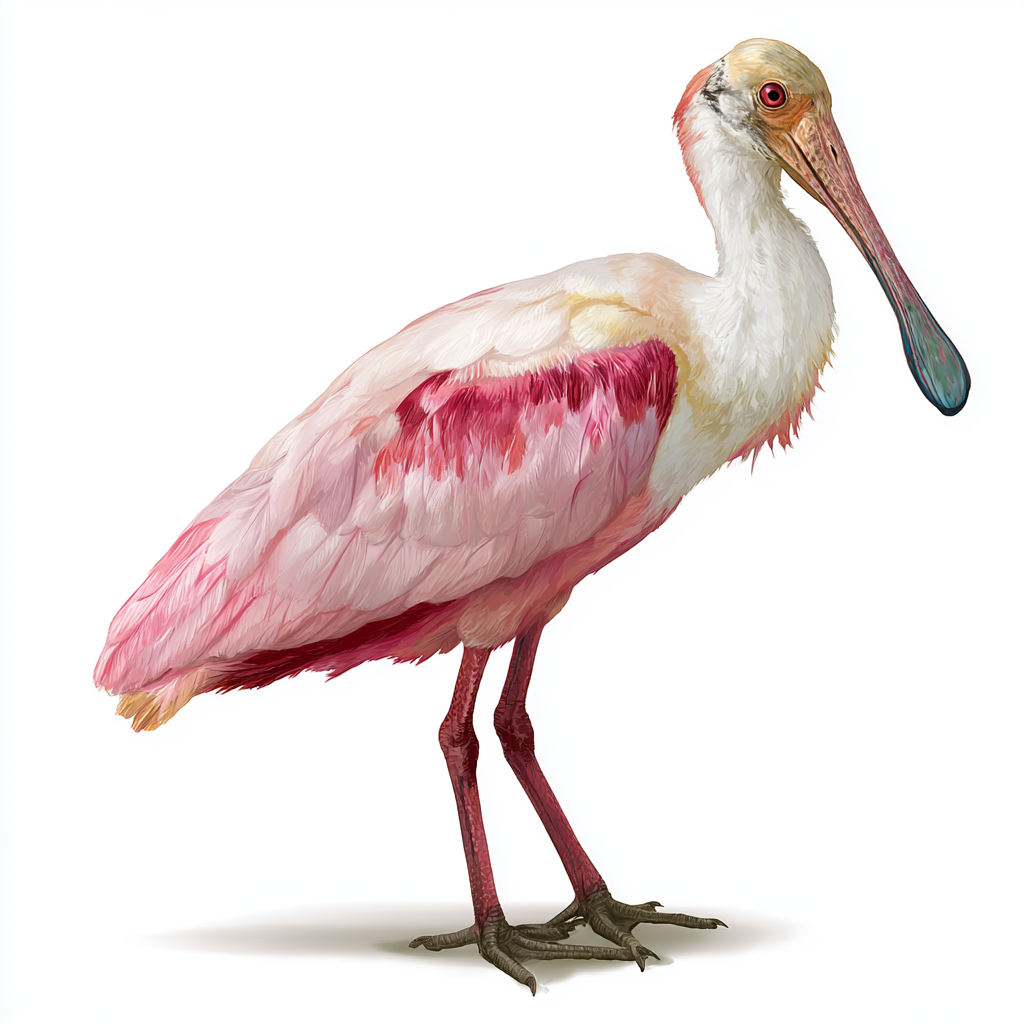
Platalea leucorodia
The Spoonbill is a rare but striking visitor to Britain, typically seen in coastal wetlands and estuaries during the summer months, particularly in the south and east. It can be spotted in Britain from April to October, with occasional wintering individuals.
Field Identification Guide
Use these features to identify Spoonbill in the field.
The Spoonbill's distinctive spoon-shaped bill, long legs, and predominantly white plumage with a yellowish breast patch are key features that distinguish it at a glance. Its unique bill shape and black legs and bill tip also help to identify the species.
The Spoonbill is larger than a Grey Heron, with a similar stature to a small egret, making it a notable sight in British wetlands.
The male Spoonbill has a mostly white plumage with a yellowish patch on its breast, a black bill with a yellow tip, and a crest of yellow feathers on the back of its head, which is more pronounced during the breeding season.
Similar to the male, the female Spoonbill's plumage is also mostly white with a yellowish breast patch, although the crest on the back of the head may be less pronounced.
The Spoonbill's call is a low, grunting "kronk" or "grop", often heard when the bird is alarmed or in flight.
Spoonbills are wading birds that feed on small fish, crustaceans, and insects in shallow water, using their unique bill to sweep and filter food particles. They are social birds that often gather in large flocks, and their slow, deliberate flight is a notable sight.
The Spoonbill can be confused with the Eurasian Egret, but its distinctive spoon-shaped bill and yellowish breast patch help to distinguish it from the Egret's more slender bill and all-white plumage.
Quick Facts
Who's spotted this?
Loading...
Recent community sightings
Loading recent sightings...