Yellow-browed Bunting
Emberiza chrysophrys
The Yellow-browed Bunting is a rare migrant to Britain, typically seen in the autumn, particularly in the eastern and southern regions, with most sightings occurring in September and October. It is a vagrant species, with only a handful of records in the country, making it a highly sought-after sighting for British birders.
Field Identification Guide
Use these features to identify Yellow-browed Bunting in the field.
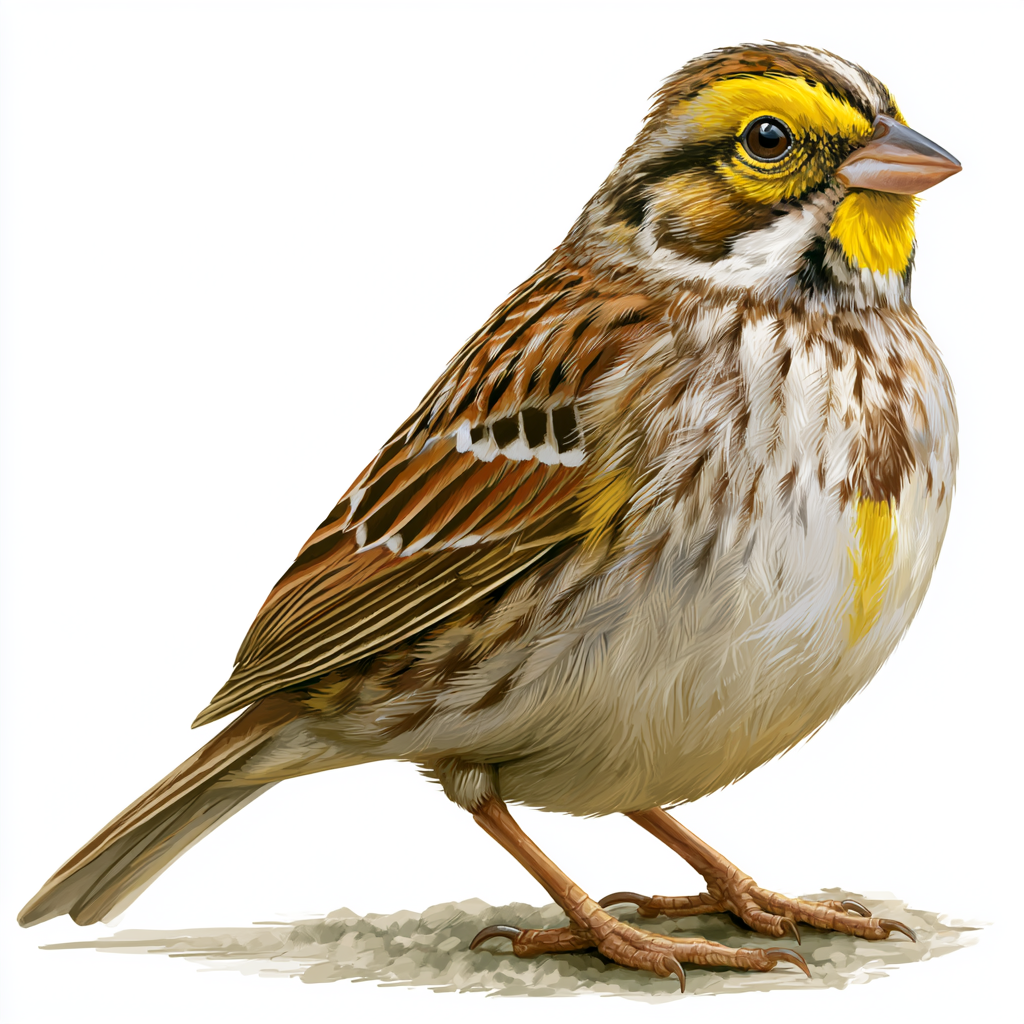
The Yellow-browed Bunting can be identified by its distinctive yellow eyebrow stripe, dark brown cheek patches, and pale yellow-brown breast and belly, which distinguish it from other bunting species. Its white outer tail feathers and dark central tail feathers are also notable features.
The Yellow-browed Bunting is slightly smaller than a Reed Bunting, measuring around 12-13 cm in length.
The male Yellow-browed Bunting has a bright yellow eyebrow stripe, dark brown crown, and nape, with a pale yellow-brown breast and belly, and a streaked brown back, with little seasonal variation in its plumage.
The female Yellow-browed Bunting is similar to the male, but with a slightly duller yellow eyebrow stripe and less pronounced dark brown cheek patches.
The Yellow-browed Bunting's call is a sharp, metallic "tik" or "tsik" sound, often repeated in a series, while its song is a melodic, warbling phrase, typically heard during the breeding season.
The Yellow-browed Bunting is a ground-dwelling bird, often seen foraging for seeds and insects in low vegetation, with a distinctive bobbing or twitching motion as it moves, and a swift, low-flying escape flight when disturbed.
The Yellow-browed Bunting can be confused with the Little Bunting, but can be distinguished by its brighter yellow eyebrow stripe, darker brown cheek patches, and pale yellow-brown breast and belly, as well as its distinctive call and song.
Quick Facts
Who's spotted this?
Loading...
Recent community sightings
Loading recent sightings...


