Yellow-breasted Bunting
Emberiza aureola
The Yellow-breasted Bunting is a rare migrant to Britain, typically seen during the summer months in the eastern and northern parts of the country. It is a distinctive bird with a bright yellow breast, making it a sought-after sighting for British birdwatchers.
Field Identification Guide
Use these features to identify Yellow-breasted Bunting in the field.
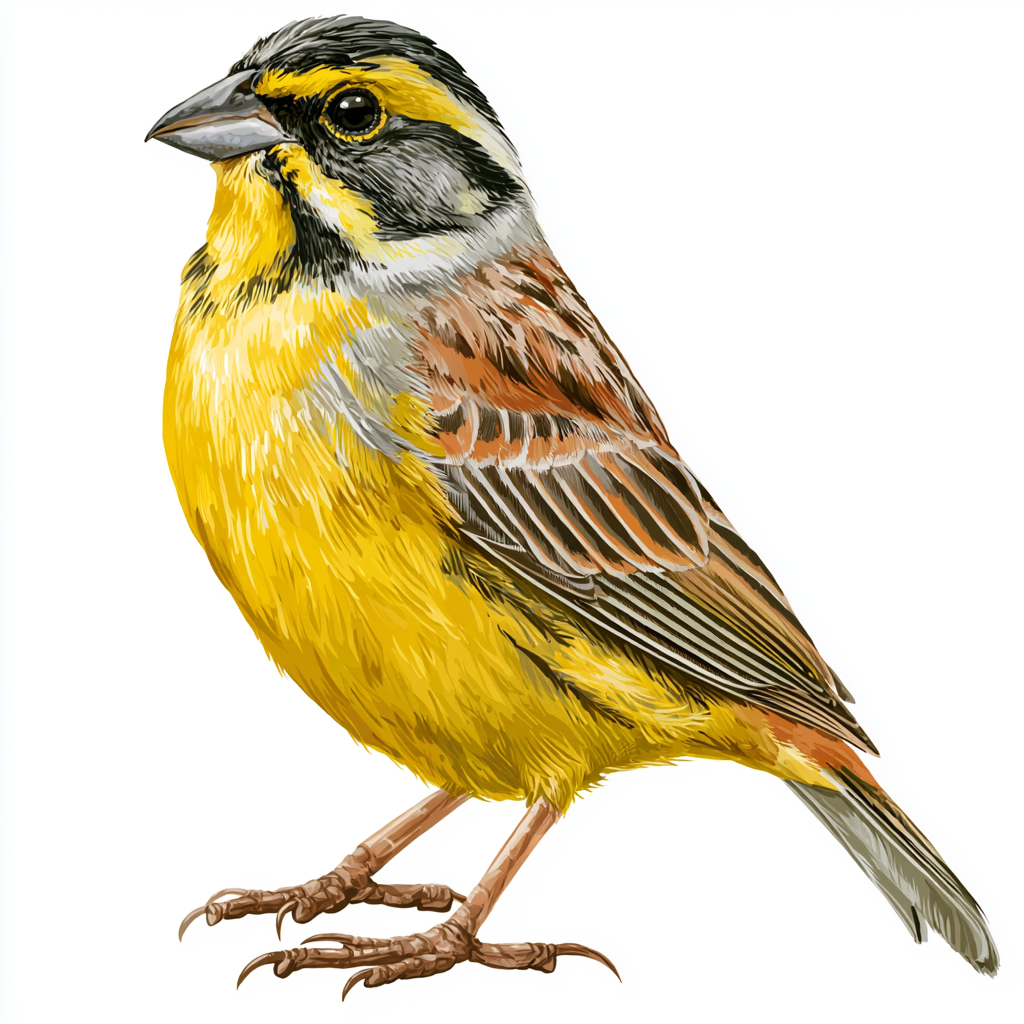
The Yellow-breasted Bunting can be identified by its bright yellow breast, white belly, and brown back with dark streaks, as well as its distinctive head pattern with a dark crown and white stripes above the eye. Its short, notched tail is also a key feature.
The Yellow-breasted Bunting is slightly smaller than a Starling, with a more compact build.
The male Yellow-breasted Bunting has a bright yellow breast, white belly, and brown back with dark streaks, with a dark crown and white stripes above the eye, making it a striking bird in its breeding plumage.
The female Yellow-breasted Bunting is similar to the male but has a duller yellow breast and less pronounced head pattern, with a more subdued colouration overall.
The Yellow-breasted Bunting's call is a sharp, distinctive "zick", while its song is a clear, repetitive "tru-tru, tri-tri" phrase.
The Yellow-breasted Bunting is a ground-foraging bird that feeds on seeds, insects, and other small invertebrates, often running or hopping along the ground in search of food, and has a distinctive flight style with rapid wingbeats.
The Yellow-breasted Bunting can be confused with other bunting species, such as the Ortolan Bunting, but can be distinguished by its bright yellow breast and distinctive head pattern, as well as its shorter tail and more compact build.
Quick Facts
Who's spotted this?
Loading...
Recent community sightings
Loading recent sightings...


