Black Grouse
Lyrurus tetrix
The Black Grouse is a rare and declining breeding bird in Britain, primarily found in upland areas of Scotland, northern England, and Wales, with peak sightings during the spring lekking season. It can be spotted in heather moorlands, grasslands, and young conifer plantations, particularly at dawn and dusk.
Field Identification Guide
Use these features to identify Black Grouse in the field.
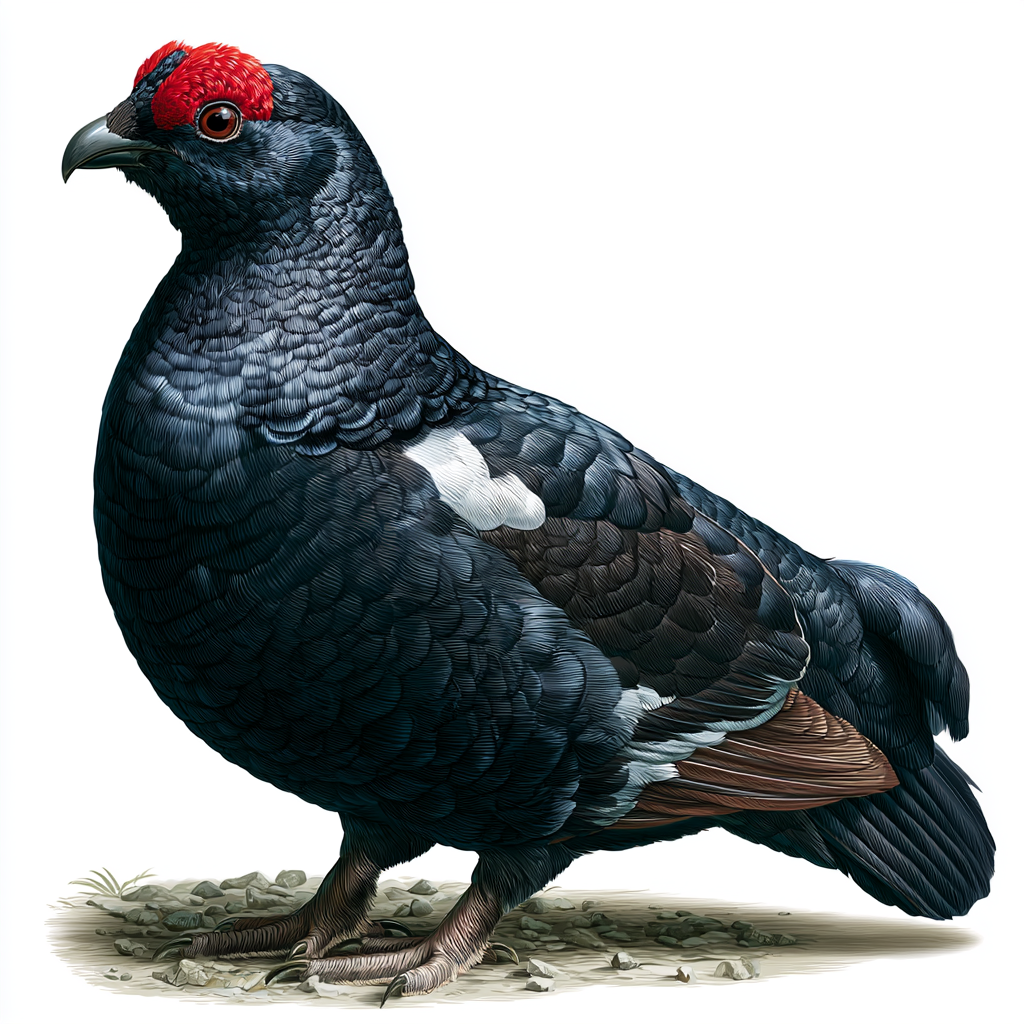
The Black Grouse is distinguished by its black plumage with a purple sheen, red wattle over the eye, and distinctive white underwing bars, making it a striking sight in its native habitats.
The Black Grouse is larger than a Grey Partridge, but smaller than a Common Pheasant.
The male Black Grouse has a glossy black plumage with a blue-purple sheen, a red wattle above the eye, and white underwing bars, with the intensity of the colours varying slightly with the season.
The female Black Grouse, or greyhen, has a mottled brown plumage with a grey-brown breast and white underwing bars, providing camouflage in its natural habitats, and is similar to the female of the Red Grouse.
The Black Grouse has a distinctive, low-pitched call that sounds like a deep, rasping "chuck-chuck-chuck" or a bubbling "go-back-go-back", often heard during the lekking season.
Black Grouse are ground-dwelling birds that forage for leaves, seeds, and insects, and are known for their unique lekking behaviour, where males gather at traditional sites to display and establish dominance, with a distinctive, slow, and deliberate flight style.
The Black Grouse can be confused with the Red Grouse, but can be distinguished by its larger size, black plumage, and red wattle, as well as its more restricted range and habitat preferences in Britain.
Quick Facts
Who's spotted this?
Loading...
Recent community sightings
Loading recent sightings...