Marsh Harrier
Circus aeruginosus
The Marsh Harrier is a medium-sized raptor that can be seen in Britain, particularly during the summer months, in wetland areas such as marshes and reedbeds, with the majority of sightings occurring in eastern and southern England. It is a rare breeder in Britain, but can be seen more frequently during migration periods.
Field Identification Guide
Use these features to identify Marsh Harrier in the field.
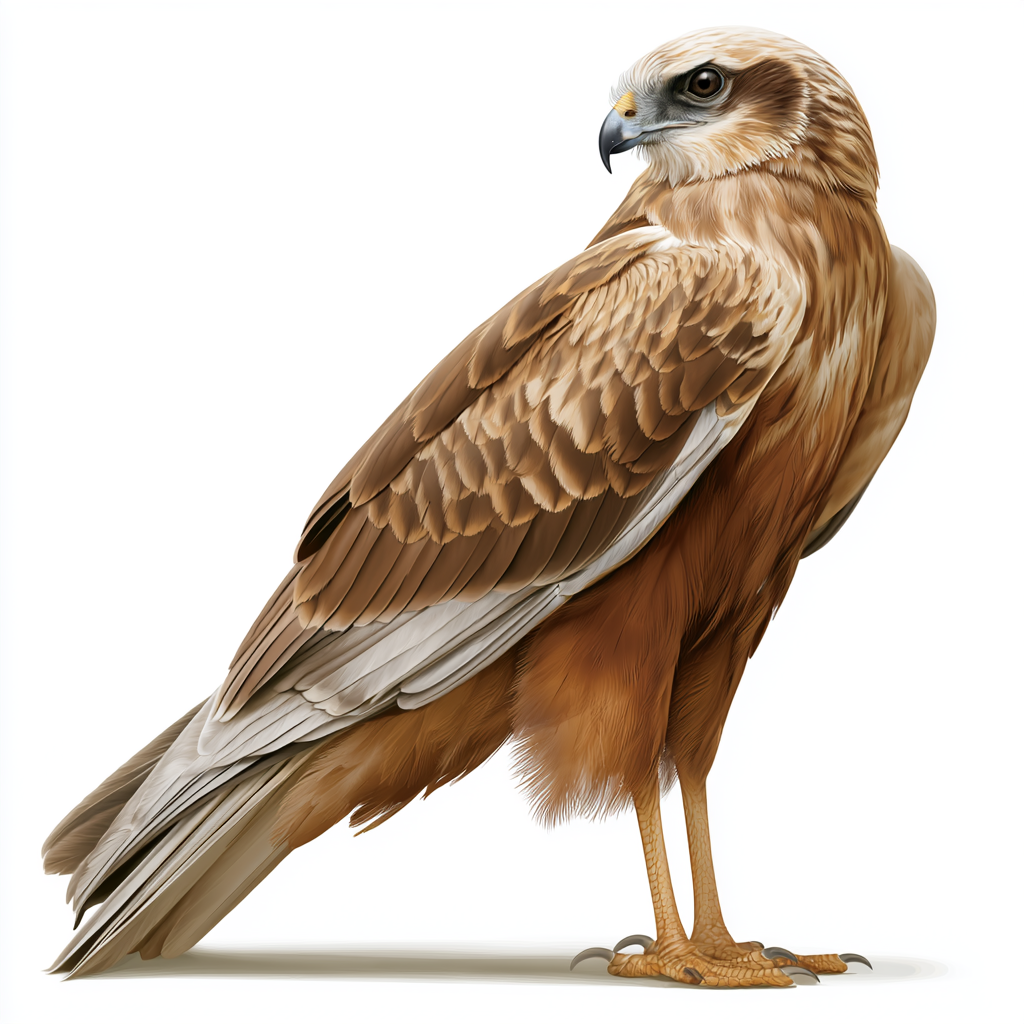
The Marsh Harrier can be identified by its broad wings, long tail, and distinctive white rump patch, as well as its pale underside and dark upperparts, which distinguish it from other harrier species.
The Marsh Harrier is larger than a Blue Tit, but smaller than a Buzzard, with a typical length of around 45-55 cm.
The male Marsh Harrier has a dark brown back and wings, with a pale underside and a distinctive white rump patch, while its head and throat are a pale grey-brown colour, with a black wing-tip and a broad black band across the tail.
The female Marsh Harrier is similar to the male, but has a more mottled brown plumage, with a darker brown back and wings, and a pale underside with dark streaks, while juveniles have a more reddish-brown hue.
The Marsh Harrier's call is a loud, shrill "kek-kek-kek" or "chee-chee-chee", often heard during display flights or when alarmed.
Marsh Harriers are skilled hunters, using their broad wings and long tail to quarter wetlands in a low, slow flight, searching for small mammals, birds, and insects, and are also known for their unique "sky-dancing" display, where they rise to great heights before plummeting downwards.
The Marsh Harrier can be confused with the Montagu's Harrier, but can be distinguished by its broader wings, longer tail, and distinctive white rump patch, as well as its more sluggish and deliberate flight style.
Quick Facts
Who's spotted this?
Loading...
Recent community sightings
Loading recent sightings...